
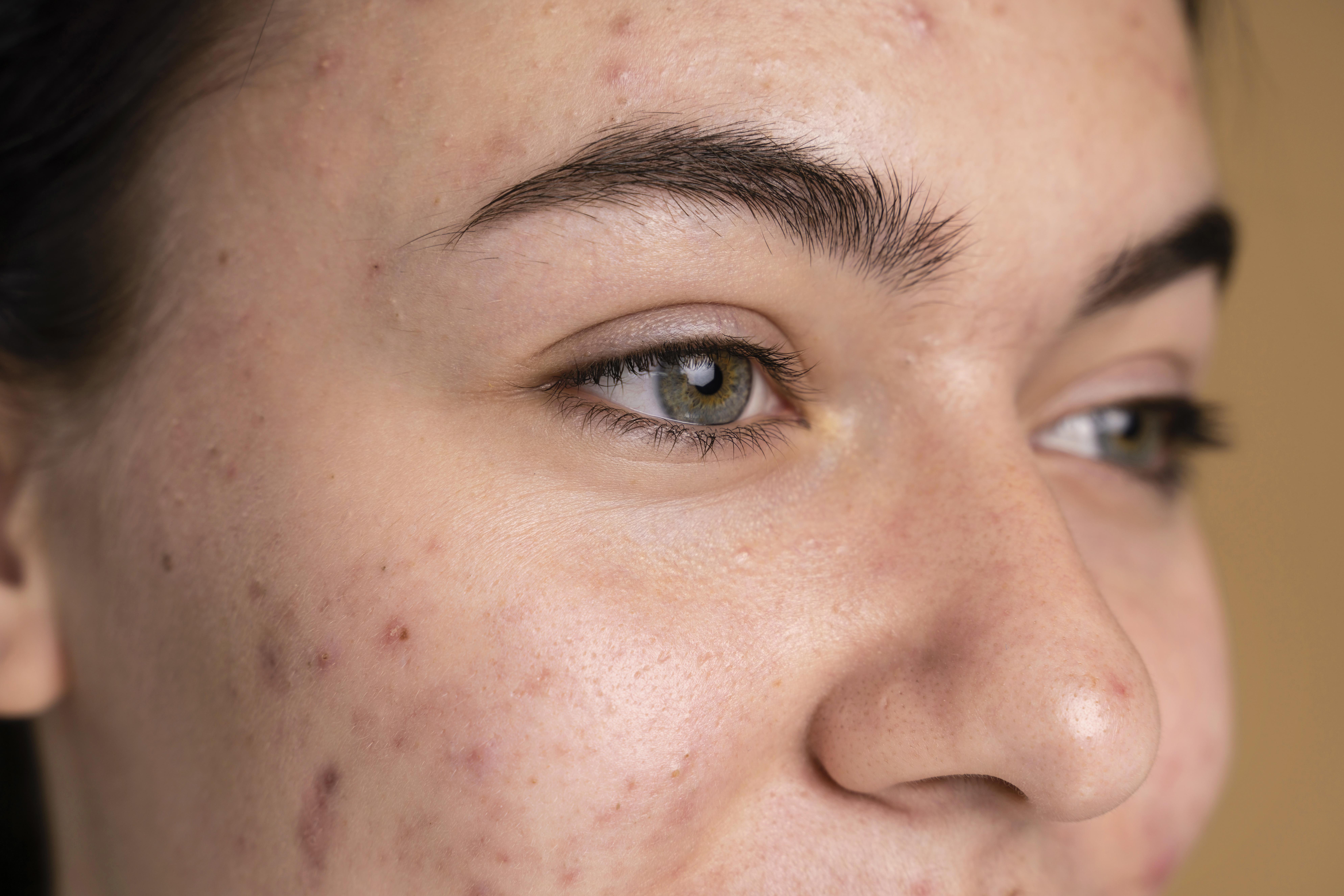
Acne scars are one of the most persistent skin concerns. Historically, treating them has meant expensive, repeated clinic visits. Non-ablative laser resurfacing, RF microneedling, and IPL have long been the go-to professional options, and for good reasons. But several of the same technologies are now available in FDA-cleared home devices, making consistent scar treatment more accessible than it used to be.
The key is knowing which device suits which type of scar. Not all acne scars are the same, and the wrong device will deliver little to no improvement regardless of how consistently you use it.
Not All Acne Scars Are the Same
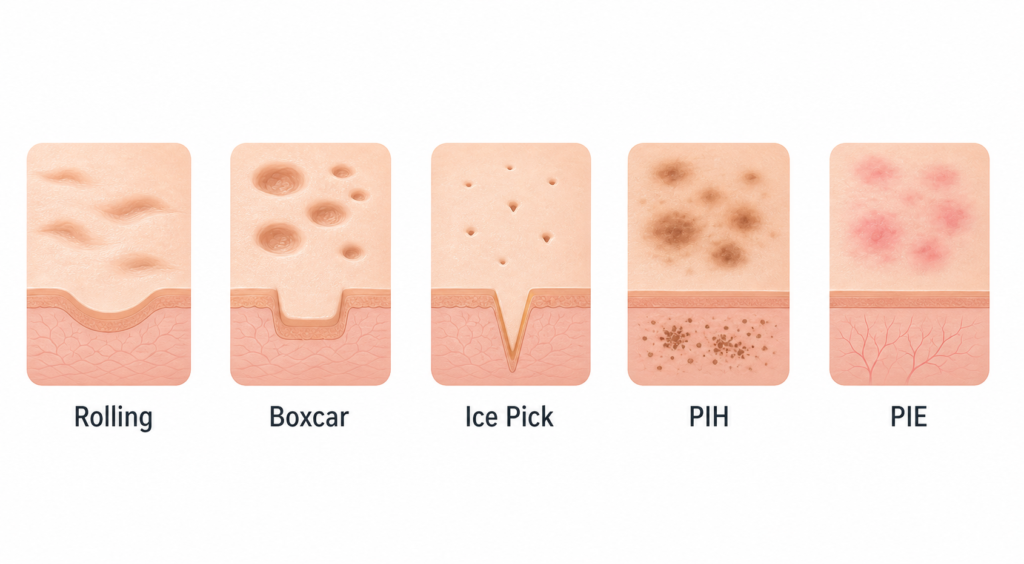
Before choosing any device, it helps to identify what you are actually dealing with. Acne scarring generally falls into three categories:
- Atrophic scars — depressed scars caused by collagen loss during healing. These include rolling scars (broad, shallow depressions with soft edges), boxcar scars (wider, sharper-edged depressions), and ice pick scars (narrow, deep channels into the skin)
- Post-inflammatory hyperpigmentation (PIH) — flat dark marks left after acne heals; not true scarring but a pigmentation response to inflammation
- Post-inflammatory erythema (PIE) — flat pink or red marks caused by damaged blood vessels after inflammation; more common in lighter skin tones
Scar type | What it looks like | Responds to home treatment? |
|---|---|---|
Rolling scars | Broad, wavy depressions | Yes — microneedling, non-ablative laser |
Boxcar scars | Wider, defined-edge depressions | Yes — microneedling, non-ablative laser |
Ice pick scars | Deep, narrow channels | Limited — clinic treatment more effective |
PIH (dark marks) | Flat brown or tan discoloration | Yes — IPL, non-ablative laser |
PIE (red/pink marks) | Flat pink or red marks | Yes — IPL, LED red light |
The Technologies Used to Treat Acne Scars
Non-ablative fractional laser
Non-ablative fractional lasers deliver controlled energy columns into the skin without removing the surface layer, triggering collagen remodeling and skin repair. Clinical studies have shown them to be effective for atrophic acne scars.
Home-use non-ablative laser devices operate on the same principle at lower fluence, making them a viable option for mild-to-moderate rolling and boxcar scarring with consistent use over time.
Microneedling
Microneedling creates controlled micro-injuries in the skin that trigger a collagen and elastin repair cascade — a process called neocollagenesis. Many studies have shown that microneedling improves acne scar appearance. The American Academy of Dermatology (AAD) notes that microneedling treatment plans can fade acne scars by 50% to 70%.
Microneedling works best for rolling and boxcar scars — the shallow-to-moderate atrophic depressions caused by collagen loss. It is less effective for ice pick scars and should be avoided on active acne, open wounds, or skin with a keloid tendency.
IPL (intense pulsed light)
IPL uses broad-spectrum light to target specific chromophores in the skin. For PIH, IPL’s light energy is absorbed by excess melanin, breaking up pigment clusters and triggering the body’s natural clearance process.
IPL is one of the more versatile home device categories for post-acne marks specifically because it addresses both pigmentation and redness depending on the wavelength filter used.
LED and red and blue light therapy
LED devices work through photobiomodulation — stimulating cellular activity at the skin level without heat-based injury. For acne scarring specifically:
- Blue light (415nm): targets Cutibacterium acnes bacteria to address active breakouts, reducing the formation of new scars
- Red light (630–660nm): supports collagen production, reduces inflammation, and promotes skin repair. It’s useful for PIE and as a healing support alongside other treatments
LED is the lowest-risk device category and is well-suited for regular home use, including as a supporting step in a broader scar treatment routine.
RF microneedling
RF microneedling combines the collagen-triggering mechanism of microneedling with radiofrequency energy delivered into the dermis, amplifying the collagen remodeling response. It is primarily a clinic treatment, but some consumer RF devices are now available. For home use, standard microneedling or non-ablative laser is generally the more accessible and better-validated starting point.
Matching Device to Scar Type
Scar type | Best home device | What it targets |
|---|---|---|
Rolling / boxcar scars | Microneedling, non-ablative laser | Collagen remodeling to raise and smooth depressed areas |
Ice pick scars | Limited home options | Clinic treatment (ablative laser, subcision) more effective |
PIH (dark marks) | IPL, non-ablative laser | Excess melanin — breaks up pigment for gradual fading |
PIE (red/pink marks) | IPL, LED red light | Vascular redness and inflammation reduction |
Active acne + early marks | LED blue + red light | Targets acne bacteria and supports skin repair simultaneously |
What to Realistically Expect
Collagen remodeling takes time — results from microneedling and laser-based treatments build gradually over weeks to months, not days. Most home protocols require a consistent treatment schedule across 8 to 12 weeks before meaningful improvement becomes visible.
Severity is the most important factor:
- Mild scarring (shallow rolling scars, light PIH, early PIE): home devices are a genuinely effective option with consistent use
- Moderate scarring (established boxcar scars, moderate PIH): meaningful improvement is possible, though results are slower and less dramatic than clinical treatment
- Severe scarring (deep ice pick scars, widespread atrophic damage): home devices offer limited results; professional treatment is the more effective starting point
Safety Notes Before Starting
- Treat active acne first. Using laser or IPL on inflamed or active acne lesions can worsen inflammation and increase PIH risk.
- Microneedling contraindications: active acne, open wounds, active eczema or psoriasis, and keloid-prone skin.
- Do not combine with strong actives. Avoid retinoids, AHAs, and BHAs on treated skin around treatment days.
- Patience over intensity. Following the recommended treatment interval consistently produces better outcomes than aggressive overuse.
The Bottom Line
Treating acne scars at home is genuinely possible for mild to moderate concerns. The key is matching the right technology to the right scar type. Non-ablative laser and microneedling address atrophic scars through collagen stimulation, IPL targets PIH and PIE, and LED light supports healing and prevents new breakouts from forming.
Start by identifying your primary scar type, choose the device category that matches it, and commit to a consistent schedule. Results will come gradually.
Sources:
- “Microneedling Can Fade Scars, Uneven Skin Tone, and More.” aad.org/public/cosmetic/scars-stretch-marks/microneedling-fade-scars
- “Fractional nonablative 1,540-nm laser resurfacing of atrophic acne scars: a randomized controlled trial.” Lasers in Medical Science, 2010. pubmed.ncbi.nlm.nih.gov/20556471/
- “Clinical factors affecting the effectiveness of 1550-nm erbium fractional laser for atrophic acne scars.” Dermatology and Therapy, 2023. pmc.ncbi.nlm.nih.gov/articles/PMC9884716/
- “Intense Pulsed Light Therapy Improves Acne-Induced Post-inflammatory Erythema and Hyperpigmentation.” Dermatology and Therapy, 2022. pmc.ncbi.nlm.nih.gov/articles/PMC9110597/
- “Postinflammatory Hyperpigmentation: A Review.” Journal of Clinical and Aesthetic Dermatology. jcadonline.com/postinflammatory-hyperpigmentation-a-review
Leave a Reply