
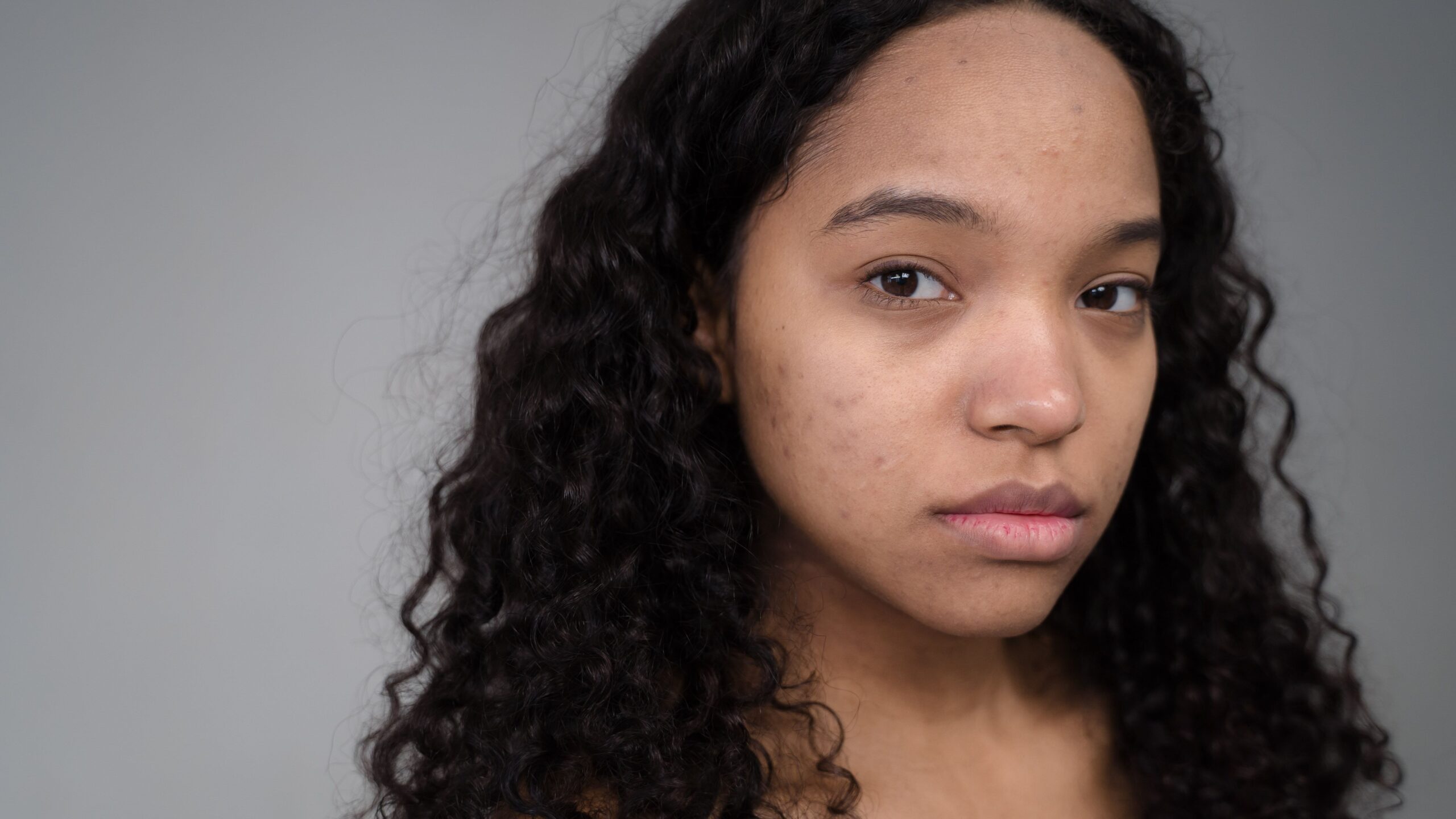
You have the SPF. You have the vitamin C serum. Niacinamide is in your routine. And the dark spots are still there three months later.
This is one of the most common frustrations in skincare and it makes sense, because topical ingredients are largely preventative. They slow new pigmentation and maintain an even tone over time, but they rarely clear established hyperpigmentation on their own. For that, you need something that works at a structural level. Chemical peels and home laser devices are the two realistic options for at-home treatment, but they work through different mechanisms, suit different pigmentation types, and are not equally safe across all skin tones.
Here is how to choose correctly.
What Type of Hyperpigmentation Do You Have?
This is the most important question to answer before comparing any treatments — because the type of pigmentation determines both which layer of the skin needs to be treated and how aggressively it can safely be approached.
| Type | Cause | Skin layer | Responds to |
|---|---|---|---|
| Sun spots / age spots | UV exposure | Epidermis | Both peels and home lasers |
| Post-inflammatory hyperpigmentation (PIH) | Acne, injury, irritation | Epidermis to upper dermis | Gentle peels first; lasers with caution |
| Melasma | Hormonal, UV-triggered | Epidermis and dermis | Low-energy lasers and peels; slow to treat |
| Uneven skin tone | Accumulated UV and ageing | Epidermis | Both peels and home lasers |
Surface pigmentation sitting in the epidermis responds faster and more predictably to both treatments. Deeper pigmentation, particularly dermal melasma, is significantly harder to treat and more easily aggravated by aggressive approaches. If you have melasma, managing expectations from the start is important: improvement is achievable, but it is slow and requires ongoing maintenance rather than a fixed course of treatment.
How Chemical Peels Work at Home
Chemical peels work through acid exfoliation. The acid breaks down the bonds between skin cells in the upper layers, causing them to shed and revealing newer, more evenly-toned skin underneath. With consistent use over multiple sessions, this progressively fades pigmented cells and improves overall skin tone.
Three peel depths exist, with different availability for home use:
- Superficial peels (AHA: glycolic and lactic acid) are the most appropriate for at-home use. Available at lower concentrations than clinic versions, they target surface pigmentation effectively and are safe for most skin tones. Glycolic acid has strong clinical evidence for improving both melasma and PIH with regular use.
- Medium-depth peels (TCA at low percentages) are available in some at-home formats. They reach deeper pigmentation more effectively but carry a higher risk of irritation and PIH, particularly on medium to darker skin tones. A clinical study confirmed TCA peels are safe and effective for skin types III and IV at lower concentrations when used carefully.
- Deep peels are clinic-only treatments and not appropriate for home use under any circumstances.
One important limitation: peels are non-selective. They affect all skin cells in the treated area, not only pigmented ones. This is why concentration, patch testing, and frequency all matter, and why darker skin tones require lower concentrations than fair skin to achieve results without triggering further pigmentation.
How Home Laser Devices Work & Which Ones Are Relevant
Rather than removing surface skin cells broadly, laser devices target melanin in pigmented cells specifically using light energy. The melanin absorbs that energy, the pigment particles break down, and the body’s lymphatic system clears them over time. This makes lasers more targeted than peels, but also means that choosing the wrong device for your skin tone can cause the laser to heat the wrong melanin, triggering PIH rather than fading it.
For home use, two device categories are realistically available:
| Device type | Wavelength | Best for | Skin tone safety |
|---|---|---|---|
| Non-ablative fractional laser (NAFL) | 1440–1550 nm | Surface and mid-depth pigmentation, uneven tone | Fitzpatrick I–III; caution for IV and above |
| IPL (Intense Pulsed Light) | Broad spectrum 500–1200 nm | Sun spots, uneven tone on fair skin | Fair to medium skin only — not suitable for Fitzpatrick IV–VI |
Nd:YAG (1064 nm) and ablative fractional lasers (CO2) are clinical devices and are not available in meaningful home-use formats.
The NAFL (1440–1550 nm) is the stronger home-use option for pigmentation.
- Unlike IPL, which uses broad-spectrum light with strong melanin absorption, the NAFL targets water in the dermis rather than melanin primarily, stimulating cell turnover and collagen remodeling.
- This mechanism results in a lower PIH risk across more skin tones than IPL. A clinical study on the 1450 nm non-ablative diode laser confirmed it is safe and effective for skin types IV and V with minimal downtime.
Home NAFL devices operate at significantly lower energy levels than clinical machines — results build gradually over weeks to months of consistent use rather than appearing after a single session.
Skin Tone Matters
The reason skin tone is so critical comes down to epidermal melanin competition. Shorter wavelengths, particularly those used in IPL, are absorbed very strongly by melanin in the epidermis, the skin’s surface layer. On darker skin, where background epidermal melanin is higher, the device heats and damages the surrounding skin before it ever reaches the target pigmentation underneath.
Longer wavelengths like 1440–1550 nm penetrate deeper before their energy is absorbed, largely bypassing surface epidermal melanin and targeting pigment more selectively, which is why the NAFL has a safer profile across a wider range of skin tones than IPL.
Practical guidance by skin tone:
- Fitzpatrick I–III (fair to medium): both IPL and NAFL are generally suitable; broadest treatment options available
- Fitzpatrick III–IV (medium to olive): IPL carries a meaningful PIH risk; NAFL at conservative settings is the safer choice; always patch test before full treatment
- Fitzpatrick V–VI (deeper skin tones): IPL is not appropriate; gentle AHA peels at low concentration are the safest starting point; any laser use should be discussed with a dermatologist first
The goal is to fade pigmentation, and using the wrong device for your skin tone can create more hyperpigmentation than it removes, and this is the most common and costly mistake in this space.
Choosing the Right Approach for Your Situation
| Situation | Best Approach |
|---|---|
| Sun spots on fair skin | IPL or AHA peel — both effective |
| PIH from acne on medium skin | Gentle AHA peel; avoid IPL |
| Melasma on any skin tone | NAFL at conservative settings or AHA peel series; avoid aggressive treatment |
| Uneven tone across the face | AHA peel series for gradual resurfacing |
| Deeper skin tone with pigmentation | Low-concentration AHA peel only; no IPL |
| Wanting faster visible results | NAFL device with consistent weekly use |
How to Use Either Treatment Safely at Home
Before starting any resurfacing treatment, confirm your skin barrier is healthy. Sensitised or compromised skin cannot tolerate peels or laser sessions — repair the barrier first and begin treatment only when the skin is stable.
Beyond that, a few rules apply to both treatments:
- SPF without exception. UV exposure during any pigmentation treatment actively worsens results and triggers new pigmentation. SPF is half the treatment
- For peels: patch test 48 hours before first use; start at the lowest available concentration; no other actives on the same night
- For home laser and IPL devices: check your Fitzpatrick skin type against the device chart before first use; never treat tanned or recently sun-exposed skin; treat on clean, dry skin only
- After every session: apply a gentle ceramide or centella asiatica formula to support skin recovery and barrier repair
- Frequency: peels once every one to two weeks; home laser and IPL devices once weekly or fortnightly per manufacturer protocol
Conclusion
Both home lasers and chemical peels are effective tools for hyperpigmentation, but only when matched correctly to the pigmentation type, the depth of the problem, and the skin tone of the person using them. Identify your pigmentation type from the table at the top of this article, confirm your Fitzpatrick skin tone before choosing a device, and treat SPF as a daily step from the moment you begin treatment.
Sources:
- Sarkar R et al. “Evidence and Considerations in the Application of Chemical Peels in Skin Disorders and Aesthetic Resurfacing.” PMC NIH, 2010. pmc.ncbi.nlm.nih.gov/articles/PMC2921757/
- Tang SC, Yang JH. “Dual Effects of Alpha-Hydroxy Acids on the Skin.” PMC NIH, 2018. Evaluating the Efficacy and Safety of Alpha-Hydroxy Acids. pmc.ncbi.nlm.nih.gov/articles/PMC11268769/
- Khunger N et al. “Safety and Efficacy of Trichloroacetic Acid Peels in the Treatment of Melasma in Skin Types III and IV.” JCAD, 2011. jcadonline.com/trichloroacetic-acid-peels-treatment-of-melasma/
- Chua SH et al. “Nonablative 1450-nm Diode Laser in the Treatment of Facial Atrophic Acne Scars in Type IV to V Asian Skin.” Dermatologic Surgery, 2004. pubmed.ncbi.nlm.nih.gov/15458524/
- Aestheticmedguide.com. “Laser Resurfacing for Black Skin: Safe Wavelengths and Settings.” 2026. aestheticmedguide.com/blog/laser-resurfacing-black-skin
- Taketatt.com. “Safe Removal for Melanated Skin: Why Wavelength Selection is Critical for Darker Skin Tones.” 2026. taketatt.com/learning/safe-removal-for-melanated-skin-why-wavelength-selection-is-critical-for-darker-skin-tones
Leave a Reply