
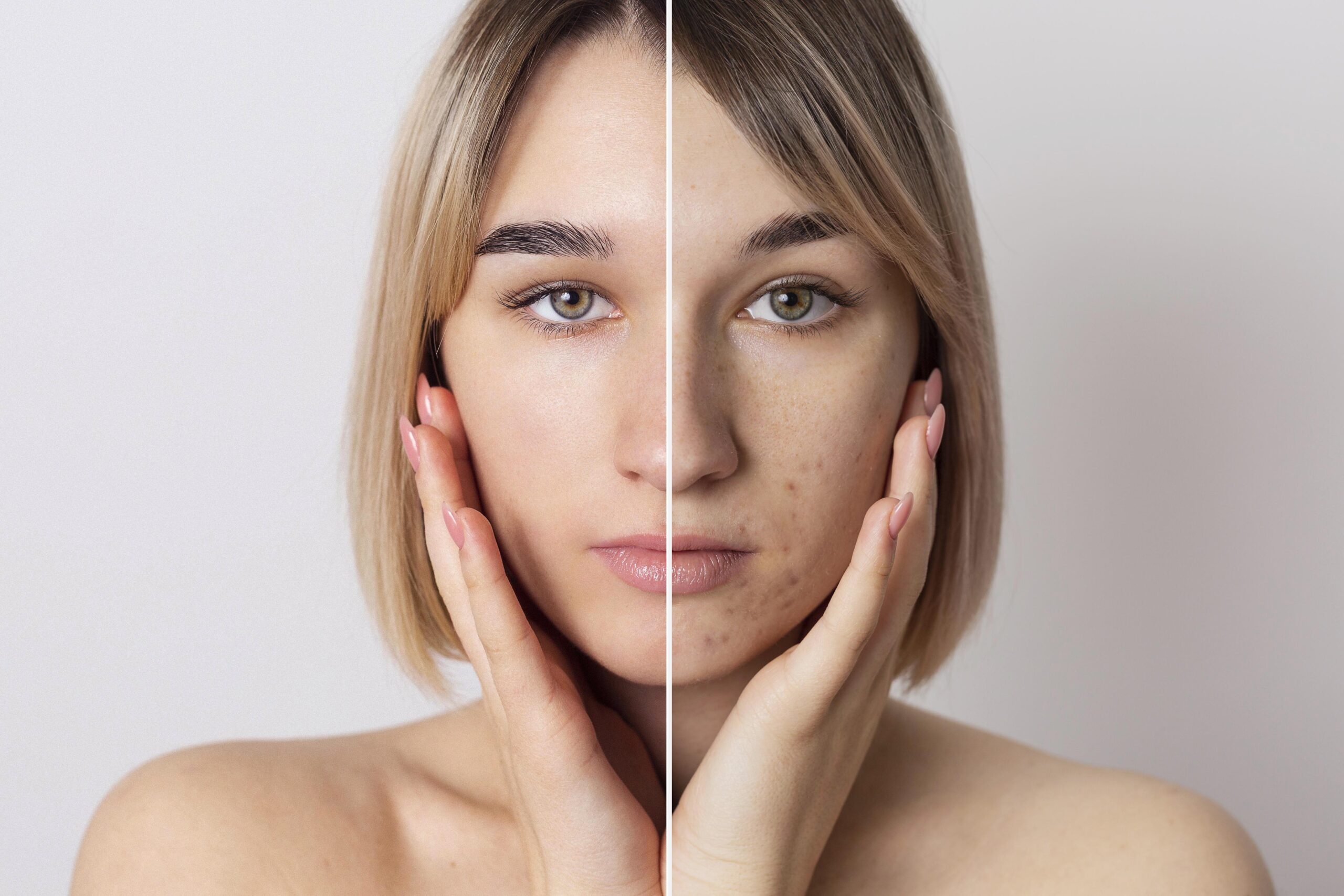
Dark spots, patchy skin tone, stubborn marks that seem to linger for months — hyperpigmentation is one of the most common skincare frustrations, and also one of the most mishandled.
Products get purchased, treatments get started, and results either disappoint or backfire entirely. Usually the reason is simple: the wrong treatment for the wrong type.
“Hyperpigmentation” is an umbrella term covering several distinct conditions that look similar but respond very differently to treatment. Getting the right result starts with identifying what you are actually dealing with.
Not All Hyperpigmentation Is the Same
| Type | Cause | Responds to home treatment? |
|---|---|---|
| PIH (post-inflammatory hyperpigmentation) | Dark marks left after acne, injury, or irritation | Yes — fades well with consistent treatment |
| Melasma | Hormonal fluctuations + UV exposure; often symmetrical | Partially — manageable but rarely eliminated at home |
| Sun spots/age spots | Cumulative UV exposure | Yes — IPL and topical brighteners are effective |
| Freckles | Genetic, UV-activated | Yes for reduction — IPL and SPF; prone to returning |
If you are treating acne-related PIH specifically, the device and ingredient framework in our acne scars guide covers it in the context of post-acne marks alongside atrophic scarring. This post covers the full spectrum.
Home Devices That Help
IPL (intense pulsed light)
IPL is the most effective home device category for pigmentation. It targets excess melanin. The light energy is absorbed by pigmented cells, breaking up melanin clusters for the body to clear. Multiple clinical studies confirm IPL’s efficacy for sun/age spots, with one study finding that 48% of patients achieved more than 50% improvement and 20% more than 75% improvement after three to five sessions. IPL is best suited to sun spots, freckles, and PIH.
⚠️ IPL and melasma — read this first:
IPL generates heat that can trigger a rebound flare in melasma patients, sometimes leaving skin worse than before treatment. The heat it generates can lead to complications. If you suspect melasma rather than general sun spots, consult a dermatologist before using any heat-based device.
Non-ablative laser
Non-ablative fractional lasers address pigmentation by stimulating cell turnover and collagen remodeling, pushing pigmented cells to the surface over time. Most effective for PIH and mild sun damage. The same caution applies as with IPL for melasma — proceed carefully and with professional guidance.
LED red light
Red light reduces inflammation and supports barrier repair, making it a useful supporting step, particularly for PIH linked to ongoing acne and inflammation. It does not directly target melanin but contributes to the overall healing environment.
Skincare Ingredients That Target Pigmentation
- Vitamin C (L-ascorbic acid, 10–20%): inhibits tyrosinase — the enzyme that triggers melanin production — while providing antioxidant protection against UV-induced pigmentation.
- Niacinamide (5%): blocks the transfer of melanin packets to skin cells, significantly decreasing hyperpigmentation after 4 weeks of consistent use in clinical trials. It works well as a daily foundation ingredient alongside any brightening routine.
- Azelaic acid (10–20%): a well-studied tyrosinase inhibitor effective for both PIH and melasma, safe for sensitive skin, and one of the few brightening actives suitable during pregnancy
- Alpha arbutin: gentle tyrosinase inhibitor; a good maintenance and sensitive-skin option alongside niacinamide or azelaic acid
- Retinoids (retinol, retinal, tretinoin): accelerate cell turnover, pushing pigmented cells to the surface faster and boosting the effectiveness of brightening actives used alongside them.
- Daily SPF (broad-spectrum, minimum SPF 30): UV exposure triggers and sustains all hyperpigmentation types — without it, no other treatment will hold
Matching Treatment to Pigmentation Type
Type | Best home device | Best ingredients |
|---|---|---|
PIH | IPL, LED red light | Niacinamide, azelaic acid, retinoids |
Melasma | ⚠️ Avoid heat-based devices; consult derm | Azelaic acid, alpha arbutin, niacinamide + SPF |
Sun spots | IPL, non-ablative laser | Vitamin C, retinoids, SPF |
Freckles | IPL | Vitamin C, SPF (prevention focus) |
One thing to expect across all types: dark marks may appear temporarily darker in the first few weeks when starting retinoids or exfoliants. This is normal cell turnover bringing pigmented cells to the surface, not a worsening reaction.
Safety Notes
- Melasma + devices: do not use IPL or laser on suspected melasma without a dermatologist’s confirmation of the diagnosis first
- Darker skin tones (Fitzpatrick IV–VI): IPL and laser carry a higher risk of post-inflammatory pigmentation. Seek devices specifically cleared for your skin tone and consider professional guidance before starting
- Do not layer vitamin C with AHAs or BHAs in the same routine step. It can cause irritation and reduce effectiveness of both
- SPF is non-negotiable: every treatment in this guide will underperform or reverse without daily UV protection
Conclusion
Identifying your pigmentation type is the first important step. PIH and sun spots respond well to consistent home treatment. Melasma demands patience, and caution with devices. Whatever the type, daily SPF is the one habit that holds all other progress in place.
Sources:
- “Clinical improvement of solar lentigines and ephelides with an intense pulsed light source.” Dermatologic Surgery, 2002. pubmed.ncbi.nlm.nih.gov/12081680/
- “Mayo Clinic Q and A: Treating Melasma.” newsnetwork.mayoclinic.org/discussion/mayo-clinic-q-and-a-treating-melasma/
- “The effect of niacinamide on reducing cutaneous pigmentation and suppression of melanosome transfer.” British Journal of Dermatology, 2002. pubmed.ncbi.nlm.nih.gov/12100180/
- “A systematic review to evaluate the efficacy of azelaic acid in the management of acne, rosacea, melasma and skin aging.” Journal of Cosmetic Dermatology, 2023. onlinelibrary.wiley.com/doi/10.1111/jocd.15923
- “The Roles of Vitamin C in Skin Health.” Nutrients, 2017. pmc.ncbi.nlm.nih.gov/articles/PMC5605218/
Leave a Reply