
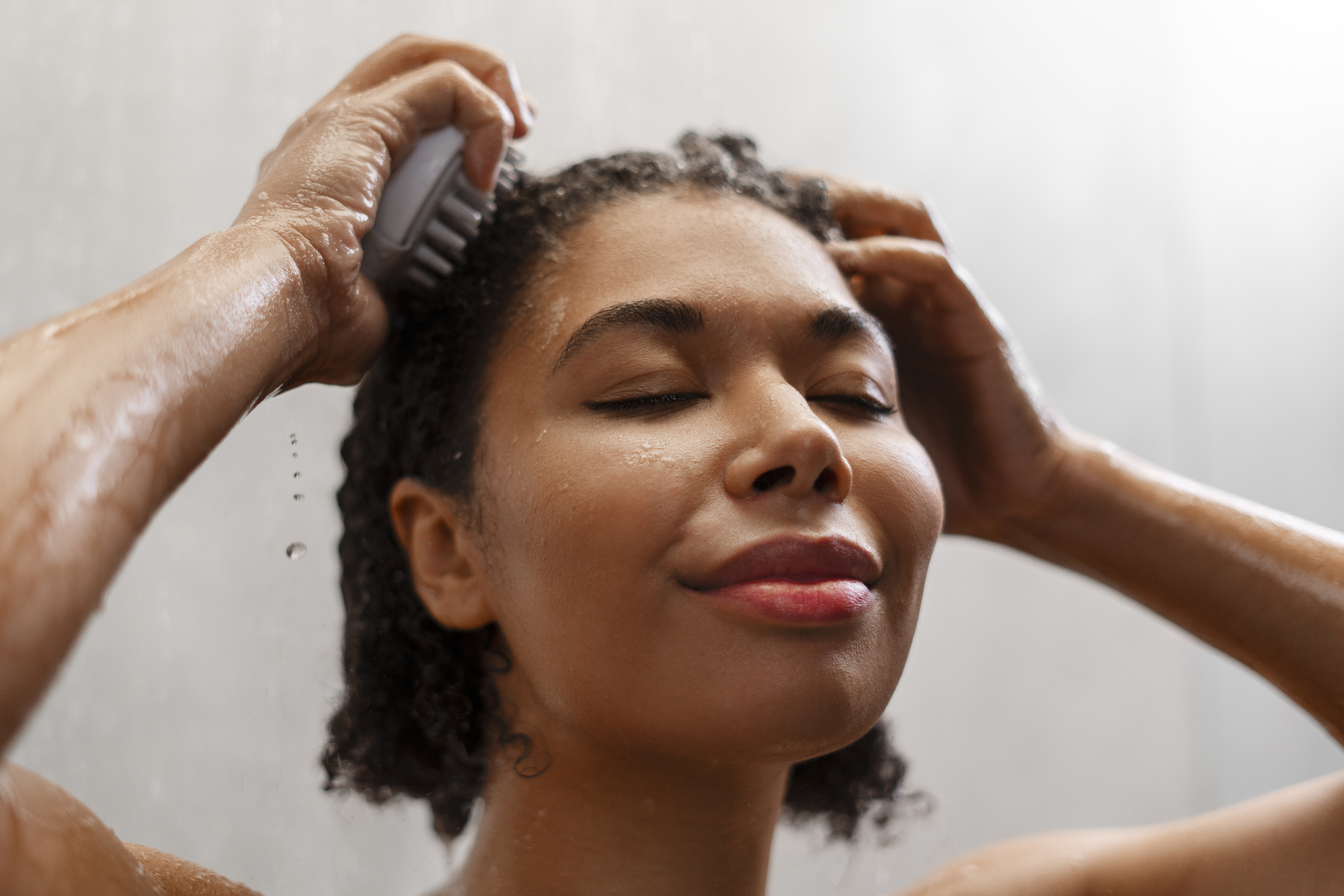
Most people have a skincare routine for their face, a body care routine, and a hair care routine. Very few have anything intentional for their scalp, despite it being the foundation everything else grows from.
The scalp is skin. It has the same structure as the skin on your face: sebaceous glands, a moisture barrier, a microbiome, and follicles that respond directly to how well that environment is maintained. When the scalp is neglected, stripped, or chronically inflamed, the quality of the hair it produces reflects that. When it is healthy, hair grows stronger, sheds less, and holds moisture better.
If persistent dryness, slow growth, or an irritated scalp have been part of your hair story, building a deliberate scalp routine is often the missing piece. Here is how to do it.
Step One: Cleanse Properly
The most common cleansing mistake is washing the lengths and ends of the hair rather than the scalp. Shampoo’s actual job is to clean the scalp — removing sebum, product residue, and environmental buildup from the skin and follicles. The lengths and ends should only be cleaned by the water that rinses off.
Frequency matters as much as technique, and it varies by scalp type:
- Oily scalp: every one to two days using a gentle, sulfate-free cleanser that cleans effectively without over-stimulating sebum production
- Dry or sensitive scalp: every three to four days using a fragrance-free, hydrating cleanser with low-irritant surfactants
- Normal scalp: two to three times per week is a reliable baseline for most people
When choosing a cleanser, look for gentle surfactants such as sodium cocoyl isethionate or coco-betaine, and avoid silicones in the formula. They build up at the root and block the treatments you apply afterwards from absorbing properly.
Step Two: Exfoliate (The Step Most People Skip)
Dead skin cells, excess sebum, product residue, and hard water mineral deposits accumulate on the scalp over time. This buildup clogs follicles, disrupts the scalp microbiome, and prevents serums and treatments from reaching the skin where they need to work.
Scalp exfoliation removes this layer and resets the surface for treatment absorption. There are two approaches:
- Physical exfoliation: scalp scrubs with fine particles, or a silicone scalp massager used during cleansing. Works well for healthy, non-sensitised scalps and provides the added benefit of stimulating circulation at the follicle level
- Chemical exfoliation: salicylic acid-based scalp treatments that dissolve buildup without friction. Better suited to inflamed, flaky, or sensitive scalps where physical scrubbing would cause further irritation
Once a week is sufficient for most people. Twice weekly is appropriate for heavy buildup or consistently oily scalps. Over-exfoliating strips the scalp barrier and triggers a rebound in oil production or sensitivity — the opposite of the intended result.
Step Three: Treat
This is the step where targeted work happens. Applied directly to the scalp after cleansing and exfoliation, when absorption is at its highest, a scalp serum or treatment delivers active ingredients where they are needed most.
The key is matching the formula to the concern:
| Scalp Concern | Key Ingredients to Look For |
|---|---|
| Dryness and flaking | Hyaluronic acid, panthenol, ceramides |
| Excess oil and buildup | Salicylic acid, niacinamide, zinc |
| Slow growth or thinning | Peptides, caffeine, biotin, redensyl |
| Redness and inflammation | Centella asiatica, beta-glucan, allantoin |
| Dandruff or irritation | Zinc pyrithione, piroctone olamine |
Application technique matters here.
- Section the hair and apply the serum directly to the scalp using an applicator tip or your fingertips.
- Then massage it in for one to two minutes using pressing and circular motions rather than friction-based rubbing.
Scalp massage increases local blood flow measurably and in a 24-week clinical study, daily scalp massage produced a significant increase in individual hair thickness. A survey of 327 participants performing regular scalp massage found that 68.9% reported hair loss stabilization or regrowth after consistent practice.
Frequency: three to four times per week for active concerns; once or twice weekly for maintenance once the scalp has stabilised.
For those looking to go a step further, low-level laser therapy (LLLT) scalp devices, available as caps, combs, and helmet-style tools for home use, have clinical evidence supporting their use for hair density and follicle stimulation. They work best used consistently after cleansing, when the scalp is free of buildup.
Step Four: Protect
A scalp routine does not end with what you apply. It extends to what you protect against. Three factors consistently undo routine progress:
- UV exposure: the scalp is one of the most sun-exposed areas of the body and receives almost no protection in most people’s routines. Scalp-specific SPF sprays or powders are worth adding for anyone spending meaningful time outdoors
- Heat styling: applying heat directly at the roots damages both the scalp skin and the follicles beneath it. Keep heat tools at least an inch from the root and use a heat protectant through mid-lengths before any heat styling
- Friction from towels and pillowcases: rough towel-drying and cotton pillowcases create mechanical friction that disrupts the cuticle and aggravates sensitive or inflamed scalps. Microfiber towels and silk or satin pillowcases reduce this without adding any product steps
This step is about removing friction from the routine so the treatment steps can work without being counteracted between sessions.
Adapting the Routine to Your Scalp Type
| Scalp Type | Cleanse | Exfoliate | Treat | Key Ingredients |
|---|---|---|---|---|
| Dry or sensitive | Every 3–4 days | Chemical, once weekly | 3–4x per week | Hyaluronic acid, panthenol, ceramides |
| Oily | Every 1–2 days | Physical or chemical, twice weekly | 3x per week | Niacinamide, salicylic acid, zinc |
| Flaky or reactive | Every 3 days | Chemical only, once weekly | 3–4x per week | Centella asiatica, beta-glucan, zinc pyrithione |
| Thinning or slow growth | Normal frequency | Weekly | Daily or near-daily | Peptides, caffeine, biotin, redensyl |
A note on the microbiome: the scalp’s microbial balance is disrupted by over-cleansing, aggressive exfoliation, and heavy fragrance use in the same way facial skin is. Keeping the routine consistent and avoiding unnecessary actives helps maintain the microbial environment that healthy follicles need.
What to Expect
Scalp health does not shift overnight. Most people notice reduced irritation and improved texture within two to three weeks of consistent routine use. Visible hair changes — thickness, growth rate, reduced shedding — take longer. A minimum of eight to twelve weeks of consistency is needed before drawing any conclusions about whether a treatment is working.
One important caveat: if symptoms include significant persistent inflammation, sores that do not resolve, or sudden dramatic shedding, these fall outside the scope of routine care. A dermatologist or trichologist assessment is the appropriate next step rather than adding more products.
Where to Start
If you have never had a scalp routine before, start with two steps: a gentle cleanser used at the right frequency for your scalp type, and a targeted serum applied with a one-minute massage. That combination alone addresses the most common scalp concerns and gives you a foundation to build from.
The scalp is where every strand of hair starts its life. Treating it with the same intention you give your facial skin is the single most impactful change most people in this space have not yet made.
Sources:
- Draelos ZD. “Essentials of Hair Care often Neglected: Hair Cleansing.” PMC NIH, 2010. pmc.ncbi.nlm.nih.gov/articles/PMC3002407/
- Gavazzoni Dias MF. “Scalp Condition Impacts Hair Growth and Retention via Oxidative Stress.” PMC NIH, 2019. pmc.ncbi.nlm.nih.gov/articles/PMC6369642/
- Koyama T et al. “Standardized Scalp Massage Results in Increased Hair Thickness.” Eplasty, 2016. Referenced via theregenclinic.com/blogs/regen-wellness/scalp-massage-hair-growth-evidence
- English RS, Barazesh JM. “Self-Assessments of Standardized Scalp Massages for Androgenic Alopecia: Survey Results.” Dermatology and Therapy, 2019. pubmed.ncbi.nlm.nih.gov/30671883/
- Iwata H et al. “Effects for Scalp Blood Flow and Properties from Scalp Massage.” Journal of the Society of Cosmetic Chemists of Japan, 2014. doi.org/10.5107/sccj.48.97
- Ideapanorama.com. “Microbiome-Conscious Practices for Calmer Skin and a Healthier Scalp.” 2025. ideapanorama.com/en/articles/microbiome-conscious-practices-for-calmer-skin-and-a-healthier-scalp
Leave a Reply