
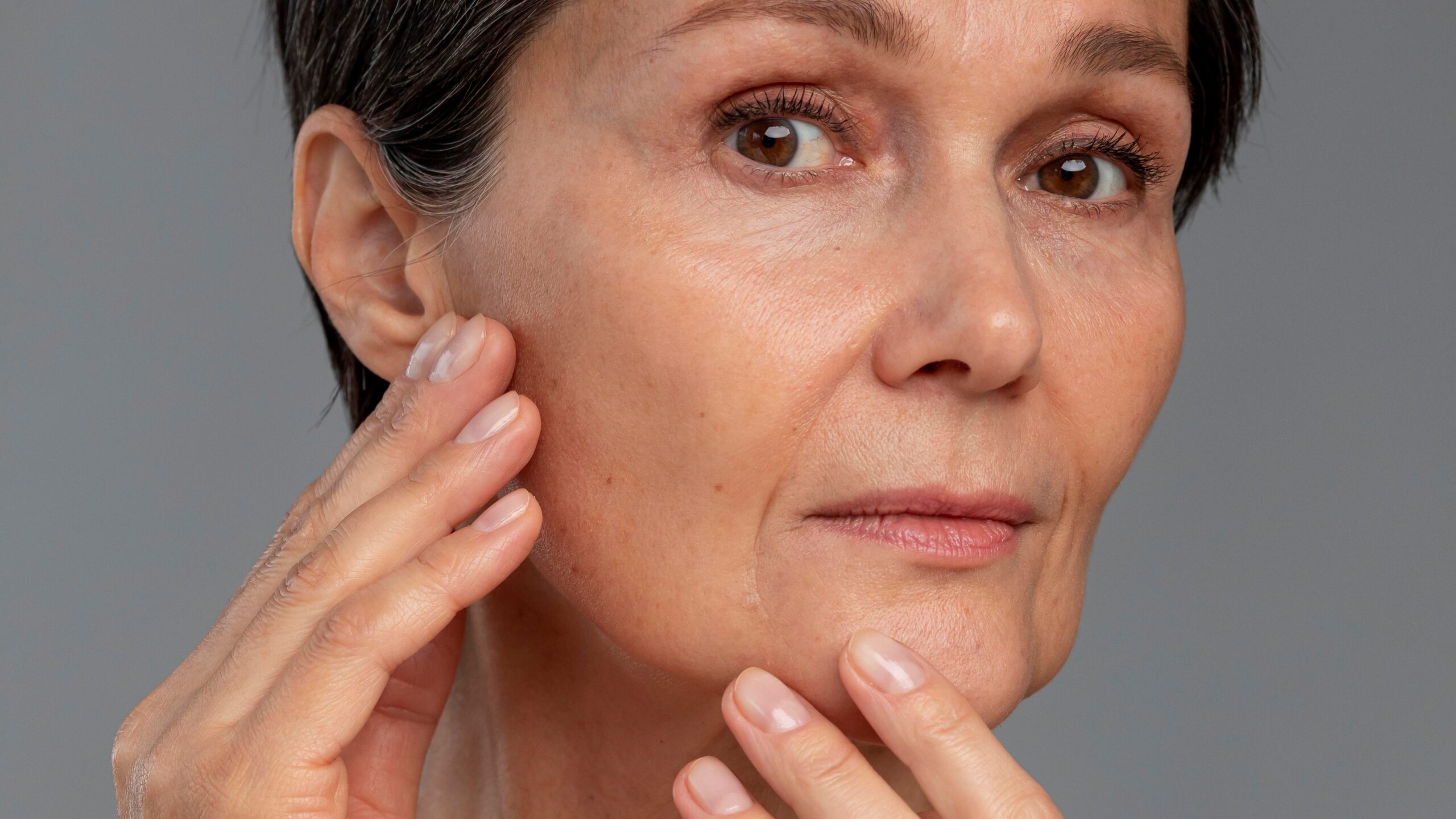
The anti-aging market is worth hundreds of billions of dollars, and most of it is selling hope dressed up as skincare. The products with the most appealing packaging often have the weakest clinical backing, while the interventions with the strongest evidence tend to be far less glamorous in how they are marketed.
What most of that marketing obscures is a useful fact: the majority of visible skin aging is not inevitable. Research consistently shows that up to 80% of facial aging is driven by extrinsic factors, such as UV exposure, oxidative stress, repetitive muscle movement, and chronic low-grade inflammation, rather than genetics. That means most of what shows on the face is, to a significant degree, in your control.
Understanding what is driving the aging you can see is the first step toward doing something effective about it. This post maps the four biological drivers of visible aging to the specific ingredients and at-home devices with clinical evidence for addressing each one.
Intrinsic vs. Extrinsic Aging: the Difference Matters
Not all aging works through the same mechanism, and the distinction shapes everything about how you approach it.
Intrinsic aging is genetically programmed and time-driven:
- Collagen production declines roughly 1% per year after age 25
- Skin cell turnover slows from approximately 28 days in your 20s to 45–60 days by your 50s
- Fat redistribution in the face gradually alters contour over decades
- These changes happen regardless of lifestyle or environment and cannot be stopped — only slowed
Extrinsic aging is environmentally and behaviorally driven:
- UV radiation actively degrades collagen and elastin through matrix metalloproteinase (MMP) enzyme activation
- Oxidative stress from UV, pollution, and poor diet damages skin cells at the mitochondrial level
- Repetitive facial muscle contractions create expression lines as the skin loses the elasticity to rebound fully
- Chronic inflammation accelerates cellular aging throughout the dermis
A published comparative study found that collagen staining intensity in sun-exposed skin degraded from 82.5% in the first decade of life to 53.2% by the ninth decade — a far steeper decline than in sun-protected skin, where significant collagen changes were not observed until after the eighth decade.
The implication is significant: most of the collagen loss people associate with aging is not inevitable decline but accelerated UV-driven breakdown.
The Four Biological Drivers of Visible Aging

Each one produces distinct visible changes and maps to a specific intervention:
| Biological driver | What it looks like | At-home solution |
|---|---|---|
| Collagen and elastin breakdown | Fine lines, sagging, loss of firmness | RF devices, retinoids, peptides |
| Repetitive muscle movement | Expression lines (forehead, around eyes, mouth) | Microcurrent devices |
| UV damage and oxidative stress | Pigmentation, dullness, rough texture, broken capillaries | Red and near-infrared LED, antioxidant serums, SPF |
| Cellular turnover slowdown | Dull, thickened, uneven, congested skin texture | Retinoids, AHA exfoliation, NAFL devices |
Collagen and Elastin Breakdown
Collagen provides the structural scaffolding of the dermis; elastin provides the recoil that lets skin spring back after movement. UV exposure activates MMPs — enzymes that degrade both directly. By the time a wrinkle is visible at the surface, years of sub-surface collagen loss have already accumulated.
Retinoids stimulate fibroblast activity to produce new collagen. RF devices generate targeted heat in the dermis that triggers collagen remodeling through a controlled thermal injury response — both address this driver directly.
Repetitive Muscle Movement
Every smile, frown, and squint contracts the same underlying muscles through the same path. Over years, the overlying skin loses the elasticity to spring back fully after each contraction, and a temporary fold becomes a permanent crease.
This is precisely what microcurrent devices are designed to address: low-level electrical currents, similar in magnitude to the body’s own bioelectrical signals, retrain and tone the facial muscles while stimulating ATP production in skin cells, which fuels cellular repair and collagen synthesis.
UV Damage and Oxidative Stress
UV radiation is responsible for the majority of extrinsic aging. It degrades collagen and elastin directly, triggers melanin overproduction that causes pigmentation, damages the skin barrier, and generates free radicals that cause cascading cellular-level oxidative damage.
Red and near-infrared LED addresses this downstream by stimulating mitochondrial activity and cellular repair through photobiomodulation. Daily broad-spectrum SPF remains the single most effective anti-aging intervention available. It prevents the ongoing UV damage that drives this entire pathway.
Cellular Turnover Slowdown
As turnover slows, dead cells accumulate on the skin surface longer before shedding. The result is the dull, slightly thickened, uneven texture that is one of the most recognizable signs of aging skin.
Retinoids accelerate turnover directly by binding to nuclear receptors and signaling faster cell cycling. AHA exfoliation removes the accumulated surface layer. Non-ablative fractional laser (NAFL) devices stimulate deeper renewal through controlled micro-injury that triggers the skin’s repair response.
At-Home Devices: What Are The Options
| Device | Mechanism | Best for | Evidence level |
|---|---|---|---|
| Microcurrent | Sub-sensory electrical current tones facial muscles; stimulates ATP and collagen synthesis | Expression lines, facial contour, overall firmness | Moderate — growing clinical literature |
| Home RF | Thermal energy heats dermis to trigger collagen and elastin remodeling | Skin laxity, deep lines, firmness loss | Strong — multiple controlled trials for home devices |
| Red and near-infrared LED | Photobiomodulation stimulates mitochondrial repair and collagen synthesis | Overall texture, fine lines, dullness, UV repair | Strong — well-established clinical evidence base |
| 1450nm NAFL | Micro-injury stimulates cell turnover and collagen production | Surface texture, fine lines, skin renewal | Moderate to strong — clinical data at home energy levels building |
A few important details on the two most clinically supported home devices:
Home RF devices have a solid evidence base specifically for home use.
- A controlled clinical trial of a home RF device found statistically significant improvements in marionette lines, skin firmness, elasticity, and dermal collagen content after 12 weeks of use.
- A separate 8-week trial found significant improvement in wrinkle scores and measurable increase in dermal thickness on ultrasound examination.
RF works by heating the dermis to approximately 40–45°C, triggering collagen fiber contraction and stimulating new collagen synthesis — the thermal injury response that the skin uses to repair itself.
Microcurrent works through a different and complementary mechanism. Rather than thermal stimulation, it delivers sub-sensory electrical currents that mimic the body’s own bioelectrical field, stimulating muscle re-education, increasing ATP production, and supporting collagen and elastin synthesis at the cellular level. Results are cumulative and require consistent use.
No single device addresses all four aging drivers. The most effective at-home anti-aging approach combines device categories alongside a consistent topical foundation.
The Topical Foundation — What Devices Cannot Replace
At-home devices work at the structural level. These ingredients work at the cellular and surface level. Both are required for meaningful results:
| Ingredient | Role | Key notes |
|---|---|---|
| Retinoids (retinol, retinal, tretinoin) | Accelerates cell turnover; stimulates collagen; reduces sebaceous activity | Most evidence-backed topical anti-aging ingredient; introduce gradually to avoid barrier disruption |
| Vitamin C (L-ascorbic acid, 10–20%) | Neutralizes free radicals; stimulates collagen synthesis; brightens UV-induced pigmentation | Unstable in air and light; look for airtight, opaque packaging |
| Peptides | Signal collagen and elastin production in the dermis | Best used alongside retinoids, not as a standalone replacement |
| Broad-spectrum SPF (SPF 30 minimum) | Blocks UV-driven collagen degradation and oxidative damage | Important daily step; without it, all other interventions are working against ongoing damage |
Where to Start: Building an At-Home Anti-Aging Routine
The most common mistake is starting with devices before the topical foundation is in place. Here is the correct sequencing:
- Daily broad-spectrum SPF — prevents ongoing extrinsic damage; without this step, everything else is fighting uphill
- Retinoid at night — start at 0.1–0.3% retinol and build gradually over 8–12 weeks as tolerance develops
- Vitamin C serum in the morning — antioxidant protection during UV exposure hours; pairs directly with SPF
- LED device — begin with red light sessions three to four times per week once the topical routine is stable
- Microcurrent or RF device — add after the topical foundation is established; choose microcurrent for expression lines and contour, RF for firmness and laxity
- NAFL device — the most advanced step; best introduced after three to six months on the above foundation
Starting From Where You Are
Anti-aging at home is not a compromise version of clinic treatment. For anyone in their 20s and 30s, consistent home use is almost always more effective than infrequent clinic visits because prevention compounds over time. For those in their 40s and 50s managing existing visible changes, home devices and actives deliver meaningful results with the understanding that significant laxity or volume loss reaches the boundary of what at-home tools can address.
Start with SPF and a retinoid. Add LED. Evaluate your primary concern and choose your device accordingly. Give it 12 weeks before drawing conclusions. The results are real; they just require patience and consistency that most product marketing does not have an incentive to encourage.
Sources:
- “Influences on Skin and Intrinsic Aging: Biological, Environmental and Lifestyle Factors.” PMC NIH, 2024. pmc.ncbi.nlm.nih.gov/articles/PMC11845971/
- Defining skin aging and its risk factors: a systematic review and meta-analysis. Sci Rep 11, 22075 (2021). https://doi.org/10.1038/s41598-021-01573-z
- “Effectiveness of a Radiofrequency Device for Rejuvenation of Aged Skin at Home: A Randomized Split-Face Clinical Trial.” Dermatology and therapy vol. 12,4, 2022. pmc.ncbi.nlm.nih.gov/articles/PMC9021338/
- “Efficacy and safety of a noninvasive, home-based RF device for facial rejuvenation.” Journal of Cosmetic Dermatology, 2023. onlinelibrary.wiley.com/doi/10.1111/jocd.16076
- “A 12-week clinical and instrumental study evaluating the efficacy of a multisource radiofrequency home-use device.” Journal of Cosmetic and Laser Therapy, 2016. pubmed.ncbi.nlm.nih.gov/27351303/
- “Physiological effects of microcurrent and its application for maximizing tissue repair.” PMC NIH, 2022. pmc.ncbi.nlm.nih.gov/articles/PMC9941239/
Leave a Reply