
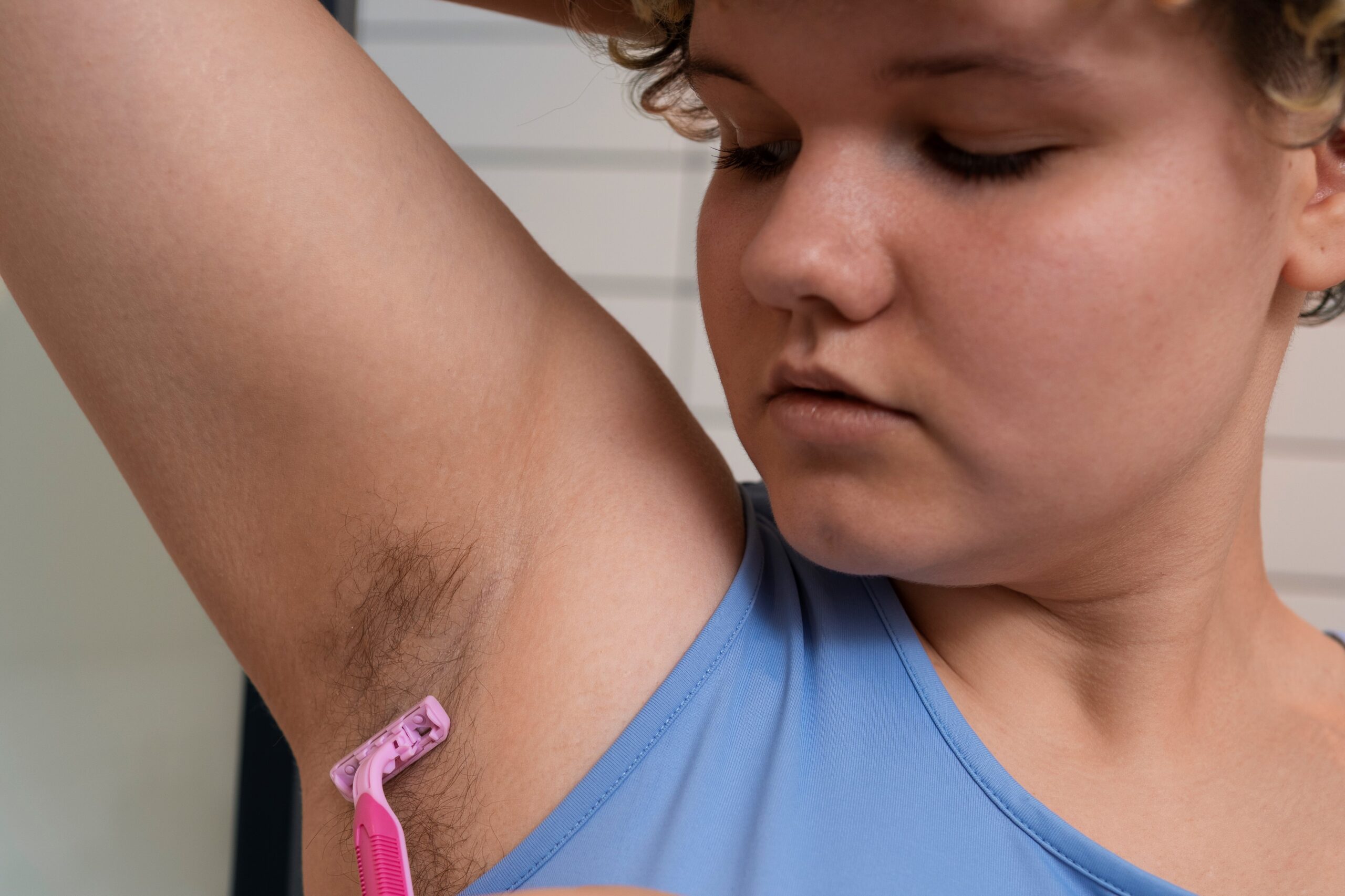
Your underarms can darken after a new deodorant, a closer shave, or a round of waxing. These products and habits can irritate the skin, and inflamed skin can leave extra pigment behind. Contact dermatitis and post-inflammatory hyperpigmentation (PIH) are listed among the common causes of dark underarms.
Deodorant isn’t always the culprit. Friction, shaving, and certain ingredients can each play a part, and they often overlap. Once you know what’s driving the darkening, you can change that habit and give the marks a chance to fade.
How Underarm Care Leaves Dark Marks
The underlying process is post-inflammatory hyperpigmentation. When skin becomes inflamed, it can produce extra pigment that may linger long after the irritation has settled. You might notice the stinging and redness fade while a brown or gray shadow remains.
Redness is also easy to miss on deeper skin tones. Irritation there can show up mainly as darker patches, so the first sign of a reaction may be color change, not an obvious rash.
Several triggers tend to stack up under the arms:
- A deodorant or antiperspirant that irritates or triggers an allergy
- Razor passes over the same patch of skin
- Waxing that leaves skin inflamed
- Ingrown hairs and the bumps they cause
- Tight clothing rubbing against the area
The cycle continues when these triggers keep returning. A brightening serum won’t get far if the skin is irritated the next morning again.
Some variation in underarm color is also normal. Skin there is often a shade darker than the surrounding area, so focus on new, spreading, or deepening discoloration.
Could Your Deodorant Be the Cause?
Sometimes. Axillary contact dermatitis is a recognized reaction, and deodorants are among the products frequently linked to it. Still, deodorant is rarely the only factor. Friction, shaving, and ingredients such as fragrance or baking soda often cause the reaction.
Signs of a Product Reaction
Look at the timing. A reaction often shows up shortly after you start using a product, though not always. Contact allergy can also develop to a product you’ve used for a long time.
Common signs include:
- Itching or burning after application
- Tenderness or flaking
- A rash that returns when you use the same product
- Darkening that follows a product change
What to Change
If a product repeatedly causes symptoms, stop using it and choose a simpler replacement. Fragrance is a common irritant, and you can learn more in this guide to fragrance and other skin irritants.
Labels such as “natural” or “aluminum-free” don’t tell you whether a formula will suit your skin. Some natural deodorants contain baking soda, for example, which can irritate underarm skin. Judge a product by how your skin responds, and don’t assume aluminum is behind every dark patch.
If the same reaction keeps coming back after you’ve switched products, a dermatologist can run patch testing to identify the trigger.
Why Shaving and Waxing Can Darken the Skin
Hair removal doesn’t stain the skin. The darkening comes from repeated irritation, razor burn, and inflamed follicles. When ingrown hairs form red bumps, those bumps can leave small dark marks once they heal.
Underarms make this harder than most areas. Skin folds, sweat, and rubbing against clothing make it worse, and hair grows in several directions, so a single close shave can mean multiple passes over one spot.
Changes that reduce the trauma:
- Avoid going over the same patch repeatedly.
- Use a shaving cream or gel to cushion the blade.
- Let irritated skin settle before shaving or waxing again.
- Leave ingrown hairs alone. Picking and digging add inflammation.
- Consider trimming if close removal keeps causing discomfort.
If irritation and ingrown hairs keep recurring, consider other longer-term options.
Calm the Skin Before Treating the Marks
Fading products work best on skin that isn’t actively irritated. Adding acids or scrubs to sore underarms can restart the inflammation that created the dark marks.
While the Skin Is Irritated
Keep the routine minimal:
- Stop using any product that stings or itches.
- Pause exfoliating acids and scrubs.
- Cleanse gently and moisturize with a simple formula you tolerate.
- Skip the hair-removal method that caused the flare-up.
- Wear looser fabrics where possible to reduce friction.
Avoid aggressive scrubbing. Rubbing the area to remove the color works against you, because it adds more irritation to skin that is already reacting.
Once It Feels Comfortable
Reintroduce products slowly, one at a time. Keep the grooming changes that reduced irritation, and add only one pigment-focused product so you can tell how your skin responds.
What Helps Fade Underarm Pigmentation
Once the irritation stops, dark marks usually fade on their own, though slowly. Most of the work is preventing new irritation, so the grooming and product changes from earlier keep doing the job.
If you’d like to speed things up, keep it gentle. Underarm skin reacts easily, and anything that stings or causes redness can bring the darkening back. Introduce one product at a time, and stop if the area becomes sore or itchy.
Avoid stacking scrubs, acids, and several brightening products. Together they can irritate the skin and darken it again.
If the color doesn’t improve after several weeks, or it keeps spreading, a dermatologist can identify the cause and suggest treatment suited to your skin.
Can At-Home IPL Help?
IPL hair removal doesn’t treat existing underarm pigmentation. Its role is narrower: for suitable users, it can reduce regrowth, meaning fewer shaving sessions, fewer ingrown hairs, and fewer irritation flare-ups.
Suitability depends on your device and on the skin tone in the treatment area. Underarm skin is often darker than the rest of your body, and IPL devices have specific instructions for this. Check your model’s guidance before using it on the area, and read the full breakdown in our article on at-home IPL and ingrown hairs.
When Dark Underarms Need a Medical Check
Most cases of darkening after grooming come down to irritation. Some patterns point somewhere else.
Dark, thickened, velvety skin can indicate acanthosis nigricans, a skin pigmentation disorder linked to diabetes. It often appears on the neck, groin, or other skin folds, so check those areas if the underarm change feels different from grooming irritation. In these cases, brightening products won’t solve the underlying cause. Treating that cause is the priority.
Conclusion
Dark underarms after deodorant or hair removal usually trace back to repeated irritation. Find the trigger, whether that’s a deodorant, a razor habit, or friction, and change it. Let the skin settle, then gently address any remaining pigment with one ingredient at a time.
If the darkening doesn’t fit simple irritation, such as thickened patches or a rash that won’t clear, see a dermatologist.
Frequently Asked Questions
Can deodorant cause dark underarms without an obvious rash?
Yes. Inflammation can be mild or hard to see, especially on deeper skin tones, where it may show up mainly as darker patches. Pigmentation can also linger after the irritation settles.
Will switching to aluminum-free deodorant help?
It depends on what caused the reaction. If fragrance or another ingredient triggered it, a different formula may help, but an aluminum-free label doesn’t guarantee that. Some natural deodorants contain baking soda, which can irritate. Pay attention to how your skin responds.
How long does underarm pigmentation take to fade?
It varies. It depends on the cause, how deep the pigment is, and whether the irritation has stopped. Expect gradual change instead of a quick result, and see a dermatologist if the color isn’t improving or is getting darker.
Leave a Reply