
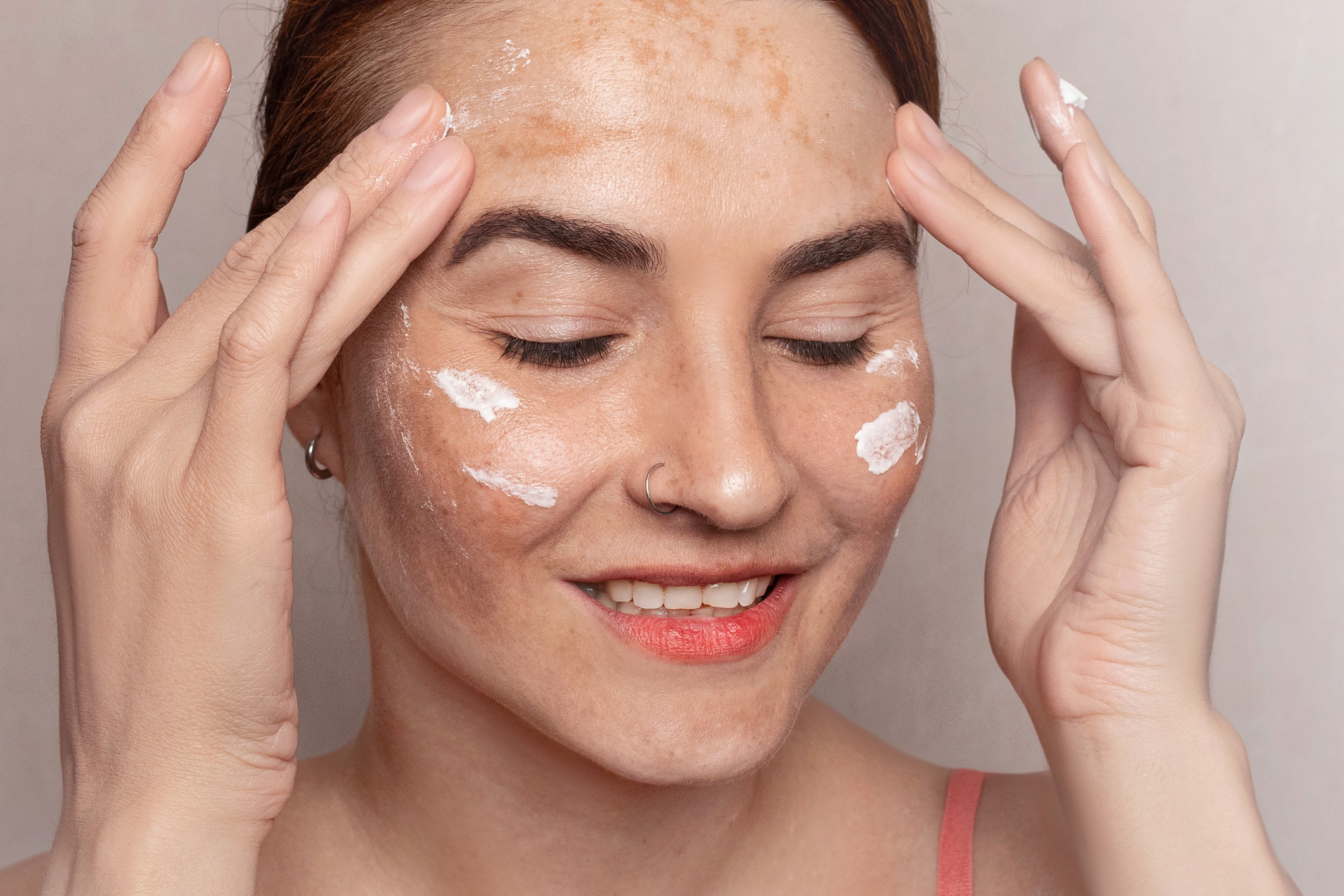
Melasma is one of the most frustrating forms of hyperpigmentation because it is not simply a dark spot that disappears when you add a stronger exfoliant. It often shows up as symmetrical brown, gray-brown, or tan patches across the cheeks, forehead, upper lip, chin, or jawline, and it can return even after it has faded.
The good news is that an at-home routine can make melasma less noticeable and help prevent it from getting darker. The less encouraging truth is that melasma rarely responds well to a “go hard or go home” approach. Too much heat, irritation, exfoliation, or aggressive device use can sometimes make the pigmentation harder to manage.
The goal is not to find the strongest brightening treatment. It is to reduce the things that keep telling your skin to make more pigment, then use a routine you can stick with for months.
Is It Actually Melasma?
Before treating pigmentation, it helps to identify what you are looking at. Melasma, post-acne marks, sun spots, and freckles can all appear brown, but they do not always respond to the same strategy.
| Concern | What it usually looks like | Common pattern | Best at-home focus |
|---|---|---|---|
| Melasma | Brown or gray-brown patches with softer edges | Often symmetrical on cheeks, forehead, upper lip, or jawline | Strict light protection and a gentle, consistent pigment routine |
| Post-inflammatory hyperpigmentation | Individual flat spots left after a pimple, rash, wound, or irritation | Appears where the inflammation occurred | Treat the original trigger and avoid new irritation |
| Sun spots | More defined individual brown spots | Areas with long-term sun exposure, such as cheeks, chest, and hands | Daily sunscreen; consider professional treatment if desired |
| Freckles | Small, distinct spots that often darken in summer | Nose, cheeks, shoulders | Sun protection and realistic expectations |
Melasma is especially likely when the patches are fairly even on both sides of the face. Hormonal changes, pregnancy, hormonal contraception, sunlight, visible light, heat, and skin irritation can all play a role. It is common, but it can be difficult to identify from a photo alone. If pigmentation is rapidly changing, uneven, itchy, raised, or hard to explain, it is worth getting a dermatologist’s opinion before treating it at home.
If your discoloration followed breakouts, picking, or a rash, you may be dealing with post-inflammatory hyperpigmentation instead. Our guide to treating acne scars and post-acne marks at home can help you separate those concerns.
Why Melasma Is So Easy to Trigger

Melasma is not only about melanin already sitting in the skin. It is also about what keeps encouraging pigment-producing cells to stay active.
For many people, UV exposure is the biggest trigger. But ultraviolet rays are not the whole story. Visible light can also deepen melasma, which is one reason a basic sunscreen routine may not always feel like enough. Heat may contribute as well, particularly for people who notice that their patches darken after hot weather, outdoor exercise, saunas, or heat-heavy treatments.
Irritation matters, too. A routine that leaves your face burning, peeling, tight, or persistently red may be working against your pigmentation goals. Inflammation can trigger post-inflammatory hyperpigmentation (PIH) and may make existing melasma appear darker or more stubborn.
That is why melasma management is often less about adding every brightening active at once and more about reducing the total amount of stress on the skin. A recent clinical review of melasma management describes treatment as a long-term, multimodal process that combines trigger control, photoprotection, pigment treatment, and maintenance—not a one-time fix.
The Step That Matters Most
Make light protection your treatment foundation
If you have melasma, sunscreen is not just the final step in a skincare routine. It is one of the treatments.
Use a broad-spectrum sunscreen with SPF 30 or higher every morning, including on days you are mostly indoors. Apply enough to cover your face, ears, and neck, then reapply when you are spending meaningful time outdoors, sweating, or wiping your face.
For melasma specifically, a tinted sunscreen containing iron oxides is worth considering. Iron oxides help protect against visible light, which may worsen pigmentation in people prone to melasma. The American Academy of Dermatology also recommends daily sun protection for melasma and notes the value of tinted sunscreen for people trying to prevent dark spots from worsening.
A hat, sunglasses, shade, and avoiding direct midday sun where possible are also useful. Melasma is usually more responsive to an excellent prevention routine than to constantly changing serums.
A simple morning routine
- Gentle cleanser, if your skin needs one.
- One antioxidant or pigment-supporting product, if tolerated.
- Moisturizer, if needed.
- Tinted broad-spectrum sunscreen.
If your sunscreen leaves a noticeable cast or does not work with your makeup, keep looking. The “best” sunscreen is the one you will use generously and consistently.
A Gentle At-Home Routine
Topical treatment remains the cornerstone of melasma care, but more products do not necessarily mean better results. StatPearls’ overview of melasma treatment describes management in both clearance-focused and maintenance phases, which is a useful way to think about your routine: first improve consistency and tolerance, then maintain the progress you make.

Choose one main treatment at a time
Azelaic acid is a sensible option for people who want a pigment-supporting ingredient that can also suit acne-prone or easily irritated skin. Start slowly if you are new to it, especially if your skin is sensitive.
Niacinamide is less dramatic than some brightening treatments, but it can be useful in a melasma routine because it supports the skin barrier while helping with uneven tone. It is a good choice for people whose skin tends to become reactive when they add stronger actives.
Vitamin C can be a helpful antioxidant step in the morning, but it is optional—not mandatory. Some formulas sting or irritate sensitive skin, so do not force it if your face becomes red or uncomfortable.
Retinoids may support overall tone and skin texture for some people, but they should be introduced gradually. Do not combine a new retinoid with multiple acids, exfoliating pads, scrubs, or home devices in the same week. Retinoids should also be avoided during pregnancy unless a qualified clinician has specifically advised otherwise.
Hydroquinone and prescription combinations are best treated as dermatologist-guided options. They can be effective for some people, but the right product, strength, timing, and duration depend on your skin, pigmentation pattern, medical history, and local regulations.
If your routine has recently become complicated, simplify it before adding more. A calm, well-moisturized barrier gives you a better foundation for pigment treatment than skin that is constantly inflamed. Barrier-repair face masks and the ingredients that actually support recovery can help if your skin feels tight, stings easily, or suddenly reacts to products it used to tolerate.
Devices, Peels, and Treatments to Approach Carefully
At-home IPL and laser devices
Light- and energy-based treatments can have a role in melasma care for selected patients, but they are not a standard first step for self-treatment. Melasma is prone to recurrence, and inflammation or excessive heat can stimulate more pigment production. Laser-focused reviews have also raised concerns about rebound pigmentation and PIH, particularly when treatment is not carefully selected and managed.
That does not mean every device will worsen every case of melasma. It does mean that it is not responsible to treat at-home IPL or laser as an automatic solution for facial patches you suspect are melasma.
(If you are considering a device or peel for pigmentation, read our guide to home lasers versus chemical peels for hyperpigmentation. It explains how those treatments differ and why matching the method to the specific pigment concern matters.)
Chemical exfoliation and strong peels
A gentle exfoliating product may fit into some routines, but trying to “peel off” melasma is rarely a smart plan. Avoid stacking exfoliating acids, retinoids, facial scrubs, dermaplaning, and devices close together.
Warning signs that you are doing too much include persistent stinging, burning, redness, shiny tight skin, flaking, or new dark marks. If that happens, pause the strong actives and return to a basic cleanser, moisturizer, and sunscreen routine until your skin is calm.
What about red-light LED?
Red-light LED is generally less aggressive than heat-based, ablative, or exfoliation-heavy treatments, but it should not be presented as a primary melasma treatment. It may fit into some people’s broader skin-support routine, but it does not replace careful light protection or a pigmentation plan.
A Realistic 12-Week Plan
Melasma changes slowly. Give a simple routine enough time before deciding it has failed.
| Timeframe | Focus | What to expect |
|---|---|---|
| Weeks 1–2 | Stop obvious irritants; begin daily sunscreen; simplify the routine | Less stinging, dryness, or redness; pigment may look unchanged |
| Weeks 3–6 | Use one treatment product consistently and maintain strict light protection | Gradual improvement in brightness or contrast for some people |
| Weeks 7–12 | Continue what is tolerable; assess whether the patches are fading, stable, or worsening | Meaningful progress may still be subtle; avoid adding multiple new treatments at once |
Take photos in the same location and lighting every few weeks. Melasma can look different from day to day depending on lighting, tanning, dryness, and surrounding redness, so photos are often more useful than checking the mirror every morning.
At-home care is worth continuing when the skin is tolerating the routine and the patches are gradually improving or staying stable. It is time to seek help when the melasma is worsening, spreading, very distressing, or unchanged after a consistent period of careful routine and light protection.
When to See a Dermatologist
Book an appointment if:
- Your pigmentation is new, rapidly changing, asymmetrical, raised, or difficult to identify.
- You developed patches during pregnancy or after a hormonal medication change.
- You have a history of severe post-inflammatory hyperpigmentation or pigment worsening after procedures.
- You are considering prescription treatment, oral medication, a peel, laser, or other in-office procedure.
- Your at-home routine consistently burns, stings, causes redness, or leaves darker marks.
- You have followed a gentle routine and daily light protection for several months without improvement.
Melasma can be managed at home, but it works best when you stop treating it like a stain that needs to be scrubbed away. Protect your skin from light, keep the barrier calm, choose treatments carefully, and give the routine enough time to work.
Leave a Reply