
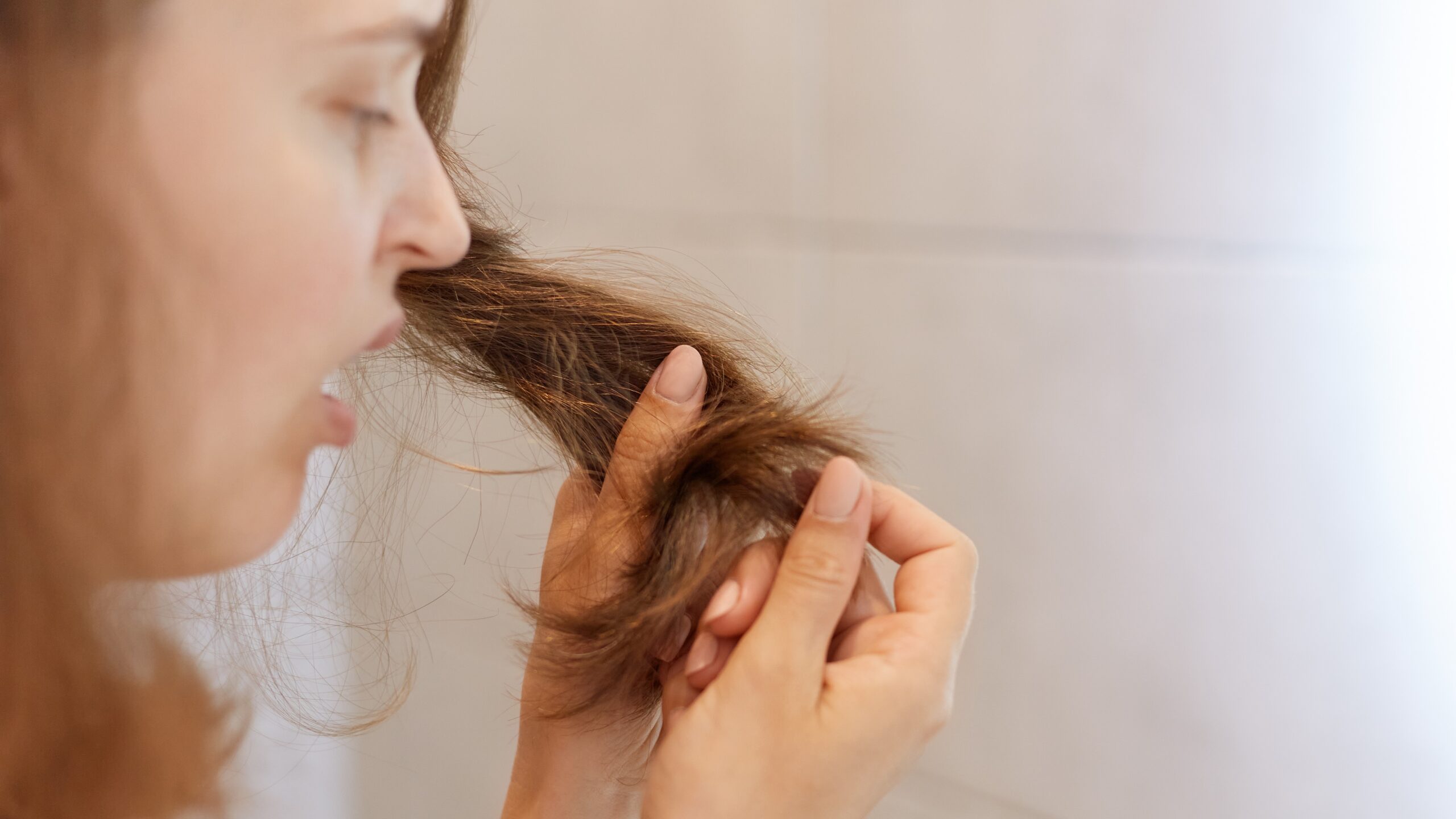
Losing weight can be good for your health, but seeing more hair in the shower, brush, or on your pillow can make the process feel alarming. The short answer is yes: rapid weight loss can cause hair loss, or, more precisely, a temporary increase in hair shedding.
For many people, this happens because major weight change, restrictive dieting, illness, surgery, or inadequate nutrition can stress the body. More hair follicles than usual shift into a resting phase, then shed weeks or months later. The shedding may look dramatic, but it does not automatically mean permanent hair loss.
Still, it is important not to assume every thinning pattern after weight loss is temporary. A widening part, receding hairline, bald patches, scalp pain, or persistent shedding can point to something else. The first step is understanding what type of hair loss you are seeing before buying supplements, scalp serums, or devices.
Why Does Hair Loss After Weight Loss Happen?
Hair grows in cycles. Most follicles are actively growing at any given time, while a smaller number are resting before releasing the hair and starting a new cycle. A major physical or emotional stressor can push more follicles than usual into that resting phase.
A few months later, those hairs shed. This is called telogen effluvium.
The delay is important. If you started a strict diet, lost weight quickly, were sick, had surgery, or began a new medication, you may not see increased shedding immediately. It often becomes noticeable later, which is why it can feel sudden and confusing. Telogen effluvium is a non-scarring form of diffuse shedding that can follow major physical stress, hormonal shifts, illness, or dietary change.
Rapid weight loss is not the only possible trigger. Hair shedding after weight loss may be linked to:
- A large calorie deficit or prolonged restrictive dieting
- Inadequate protein intake
- Low iron or another nutrient deficiency
- Illness, infection, surgery, or another physical stressor
- Emotional stress and poor sleep
- Hormonal changes
- An existing thyroid, hormonal, or genetic hair-loss pattern becoming more noticeable
A review of the relationship between nutrition and hair loss identifies sudden weight loss and decreased protein intake as known triggers for acute telogen effluvium.
This does not mean everyone who loses weight will lose hair. It also does not mean shedding is proof that you have done something wrong. But it may be a sign that your body needs more time, stability, and nutritional support than a quick-fix hair product can provide.
Is It Shedding, Breakage, or Thinning?
The most useful question is not “What hair-growth product should I buy?” It is “What is really happening to my hair?”
| What you notice | More likely explanation | What it can mean | Best next step |
|---|---|---|---|
| More full-length hairs in the shower, brush, or on your pillow; thinning looks fairly even | Telogen effluvium | Temporary shedding after a body stressor | Identify the trigger, support recovery, and monitor the pattern |
| Short snapped strands, frizz, split ends, and uneven lengths | Breakage | Damage along the hair shaft | Reduce heat, bleach, friction, and tight styling |
| A gradually widening part, crown thinning, or receding temples | Pattern hair loss | Genetic or hormonal miniaturization may be involved | Consider professional assessment and evidence-based treatment |
| Smooth bald patches or sharply defined hair loss | Not typical weight-loss shedding | Another type of alopecia may be involved | Get medical advice promptly |
| Itch, pain, significant scale, redness, or pustules | Not typical uncomplicated shedding | A scalp condition or inflammation may be involved | Avoid treating it as simple diet-related hair loss |
Telogen shedding usually involves full-length hairs released from the root, sometimes with a tiny white bulb on one end. Breakage tends to appear as shorter, frizzy, blunt, or uneven pieces throughout the hair.
If you are not sure which pattern you have, start by learning the difference between hair breakage, shedding, and thinning. A conditioning mask may help reduce breakage, but it cannot correct a nutrient deficiency or stop a genetic thinning pattern.
What Helps Hair Grow Back at Home?
There is no overnight solution for hair loss after weight loss. The most useful at-home approach is to support recovery, minimize unnecessary damage, and avoid changing your routine every few days.
Stabilize the trigger
If shedding started during rapid weight loss, think beyond hair products. Consider whether your diet has become too restrictive, whether you are consistently eating enough protein and overall food, or whether low appetite, nausea, digestive symptoms, or fatigue are making it difficult to meet your needs.
A balanced, sustainable eating pattern is more useful than adding a “hair vitamin” to an inadequate diet. Hair is not essential for immediate survival, so the body may prioritize other functions when energy or nutrient intake is too low.
You do not necessarily need to stop every weight-loss effort. But if your intake is very limited, your weight is changing quickly, or you suspect a deficiency, a healthcare professional or registered dietitian can help assess whether the plan is realistic for your health.
Be gentle with your hair
Temporary shedding can make hair feel thinner, more fragile, and harder to style. Protect the hair you still have by:
- Using conditioner every time you wash, especially through the lengths and ends
- Detangling gently, starting from the ends and working upward
- Reducing frequent heat styling, bleaching, relaxing, and harsh chemical services
- Avoiding tight ponytails, buns, braids, extensions, or styles that pull at the hairline
- Skipping aggressive brushing, scalp scratching, and repeatedly “testing” how much hair comes out
- Keeping a regular wash routine instead of avoiding shampoo because you are afraid to see shed hairs
The American Academy of Dermatology similarly recommends gentle shampooing and conditioning, less heat, and avoiding styles that pull tightly when hair is thinning or shedding.
A simple scalp-care routine can also be helpful if your scalp is dry, itchy, oily, or irritated. Just avoid treating the scalp with too many acids, oils, exfoliants, or new serums at once.
Do not panic-buy supplements
Biotin, collagen, iron, zinc, and “hair-growth” blends are heavily marketed to anyone experiencing shedding. But supplements are not automatically the answer.
They can be useful when they correct a genuine deficiency. Taking high doses without knowing what is missing, however, may not solve the underlying issue and can complicate medical testing or create avoidable side effects.
Focus first on adequate food intake and seek individualized advice if shedding is severe, persistent, or comes with fatigue, dizziness, menstrual changes, digestive symptoms, or feeling unusually cold.
What about minoxidil and red-light devices?
Topical minoxidil and low-level light therapy may help some people with pattern hair loss, but they are not automatic treatments for every episode of temporary shedding.
If rapid weight loss has triggered telogen effluvium, the priority is identifying and correcting the stressor. A device cannot replace adequate nutrition, treat a thyroid issue, or resolve a medication-related change on its own.
That does not make devices useless. They may be worth considering if you also have a widening part, gradual thinning, or a family history of pattern hair loss. LLLT devices are more relevant to androgenetic thinning than to shedding triggered by stress or nutrient deficiency.
What About GLP-1 Medications?
Hair shedding has become a common concern among people using GLP-1-based weight-management medications. It is important not to oversimplify the issue.
Hair loss has been reported in clinical trial data for some medications, including Zepbound. Its FDA-approved prescribing information states that reported hair-loss events were associated with weight reduction.
That does not prove that the medication directly damages hair follicles or that everyone taking a GLP-1 medication will shed. Several factors can overlap:
- Weight loss may be happening quickly
- Reduced appetite can make adequate protein and overall intake more difficult
- Nausea, vomiting, or digestive symptoms may affect nutrition
- Stress, illness, hormonal changes, or pre-existing thinning may be happening at the same time
If you think a prescribed medication may be related to your hair loss, do not stop it without speaking with the clinician who prescribed it. They can help assess the rate of weight loss, nutrition, other possible triggers, and whether your treatment plan needs adjusting.
When to Get Professional Help
At-home care makes sense when shedding is mild to moderate, clearly follows a likely trigger, and gradually improves as your health and routine stabilize. Get professional guidance if:
- Shedding continues for several months after your weight has stabilized
- Your part is widening, your temples are receding, or thinning is concentrated at the crown
- You have bald patches or sharply defined areas of hair loss
- Your scalp is painful, very itchy, inflamed, scaly, or developing bumps
- You have fatigue, dizziness, menstrual changes, digestive symptoms, or other whole-body symptoms
- You suspect a nutrient deficiency, thyroid issue, hormonal change, or medication side effect
Temporary shedding and pattern hair loss can happen at the same time. If you are seeing gradual recession or a persistent widening part, what actually helps a receding hairline may be more relevant than waiting for a temporary shedding episode to resolve on its own.
Rapid weight loss can cause hair loss, but it often causes temporary shedding rather than permanent follicle damage. The most useful response is to stabilize your routine, eat adequately, handle hair gently, and give the hair cycle time to recover.
Leave a Reply