
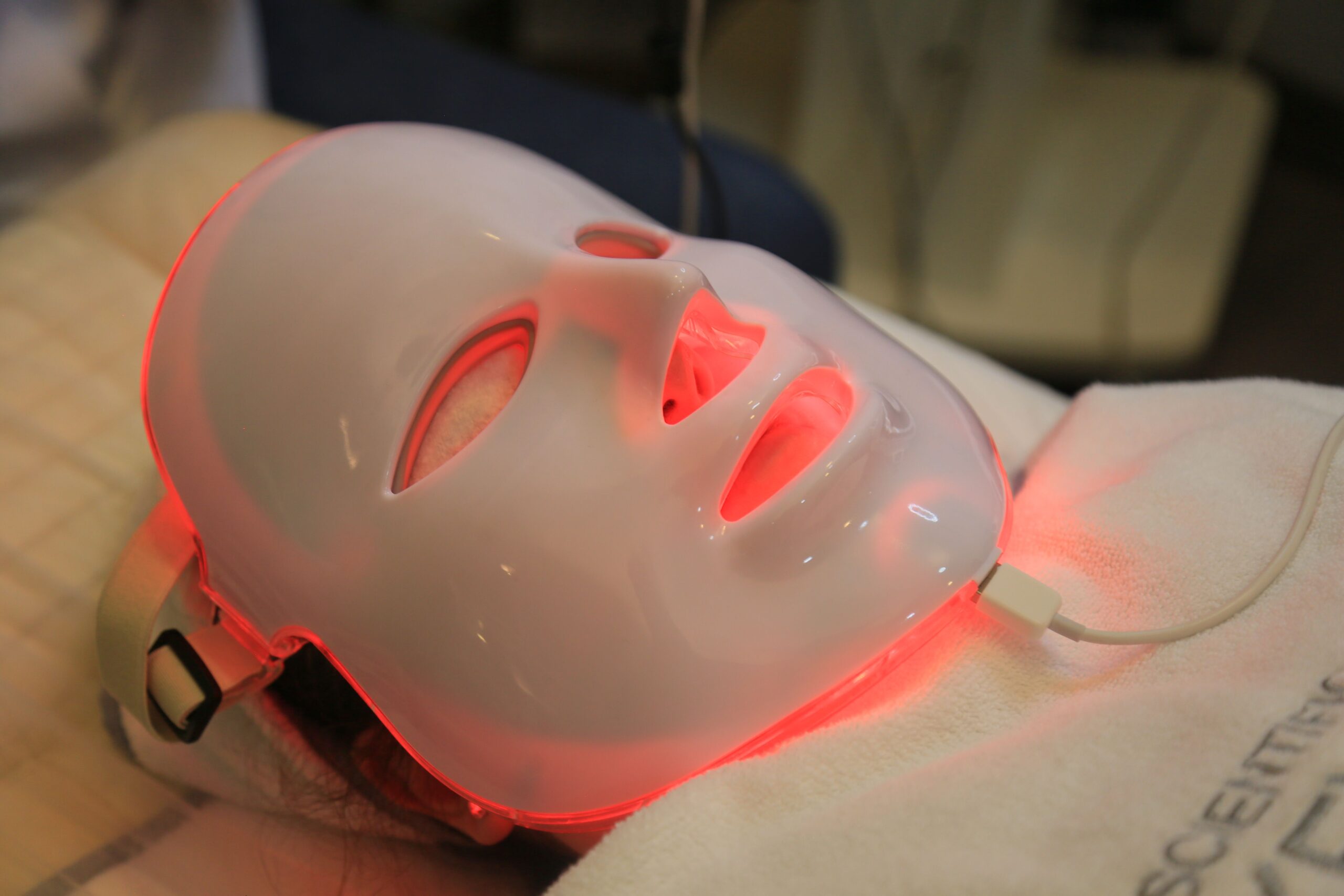
LED devices are one of the fastest-growing categories in at-home beauty. They are also one of the most confusing. Claims range from wrinkle reduction to acne clearance to accelerated healing, often made by the same device. It sounds like marketing overreach, but the underlying science is more solid than the noise around it suggests.
The key is understanding that LED results are wavelength-specific. Different wavelengths penetrate to different depths, activate different cellular targets, and address different skin concerns. Buying a device without knowing which wavelength you need is like buying medication without checking what it treats.
How LED Light Therapy Works
LED therapy works through a process called photobiomodulation (PBM) — light energy at specific wavelengths is absorbed by chromophores in skin cells. This triggers a cascade of cellular responses: increased ATP (cellular energy) production, upregulation of collagen and elastin synthesis, and modulation of inflammation.
Critically, this is a non-thermal process. LED does not heat tissue the way laser or RF does. It works at the cellular level through light absorption, not energy-induced injury. This is what makes it safe for regular home use and suitable for sensitive skin types.
Red Light (630–660nm): Collagen, Anti-Aging, Healing
Studies found that red and near-infrared light treatment produced significant improvements in skin roughness, fine lines, wrinkle reduction, and intradermal collagen density. Low-level red plus near-infrared LED combination also significantly increased collagen and elastin gene expression and protein synthesis in human dermal fibroblasts and skin tissue.
Red light also supports wound healing, reduces post-procedure inflammation, and accelerates recovery after microneedling or laser sessions, making it a versatile supporting tool in a broader home routine.
Best for: fine lines, skin texture, post-treatment recovery, general skin rejuvenation
Blue Light (415nm): Acne and Bacteria
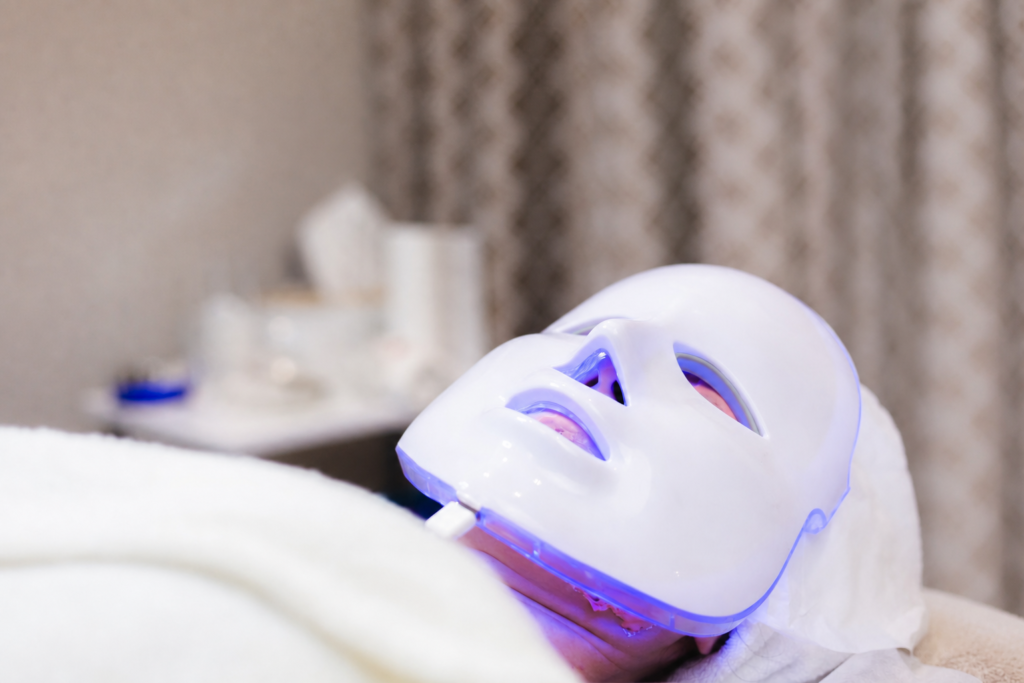
Blue light stays in the epidermis and targets Cutibacterium acnes — the bacteria central to inflammatory acne breakouts. When porphyrins inside the bacteria absorb blue light at approximately 415nm, they generate reactive oxygen species that damage bacterial membranes and reduce the bacterial load.
A study of an FDA-cleared home-use LED mask emitting combined blue (415nm) and red (633nm) light found significant reductions in both inflammatory and non-inflammatory lesion counts, with 86% of participants achieving a meaningful improvement in acne severity after consistent home use four times per week.
Blue light addresses active inflammatory acne. It does not treat comedonal (non-inflammatory) acne such as blackheads and whiteheads, and is not effective for deeper cystic lesions.
Best for: mild-to-moderate inflammatory acne, preventing new breakouts, oily and acne-prone skin
Near-Infrared Light (830nm+): Deeper Repair and Recovery
Near-infrared (NIR) light penetrates deeper than red light, reaching subcutaneous tissue. It’s the most effective wavelength range for wound healing and deeper tissue repair. It supports collagen remodeling at a deeper level, reduces chronic inflammation, and is increasingly included alongside red light in combination home devices.
A study found that near-infrared at 830nm produced significant improvements in skin appearance and collagen density comparable to red light, with the 570–850nm polychromatic combination performing particularly well. NIR is most effective when combined with red light rather than used in isolation — the two wavelengths address complementary depths and cellular targets.
Best for: skin laxity, deeper lines, post-treatment recovery, chronic inflammation
Note: most of the strongest NIR evidence comes from medical and clinical studies; home device-specific evidence is solid but continues to grow
Yellow/Amber Light (570–590nm): Redness and Sensitivity
Yellow light targets superficial blood vessels and reduces redness, making it relevant for rosacea-prone or sensitive skin. It supports lymphatic drainage and reduces surface-level inflammation. A study found that 570nm yellow composite LED treatment showed measurable effects on both facial wrinkles and brown spots.
That said, the evidence base for yellow light is less robust than for red, blue, and NIR. It is present in some multi-wavelength panels and is a useful complementary wavelength — but not the primary reason to choose a device.
Best for: redness, rosacea-prone and sensitive skin, PIE (post-inflammatory erythema)
What LED Cannot Do
LED is one of the most accessible and lowest-risk home device categories, but it has real limitations worth being clear about:
- Does not replace exfoliation: LED does not clear congestion, blackheads, or surface dead skin cell buildup
- Does not match RF or laser for laxity: for moderate-to-severe skin laxity or deep collagen loss, RF and non-ablative laser produce a stronger structural response
- Blue light alone is not enough for moderate-to-severe acne: it reduces bacterial load but works best alongside topical actives for meaningful acne clearance
- Results require consistency: irregular or infrequent use produces minimal cumulative benefit
Choosing an LED Device: What to Look For
- Verified wavelengths with nm specifications: look for exact numbers (415nm, 633nm, 830nm), not just “red” or “blue”
- FDA clearance: confirms the device has been reviewed for safety and its claimed use
- Sufficient coverage area for the treatment zone (face, neck, décolletage)
- Combination wavelengths if treating multiple concerns simultaneously
Conclusion
LED is one of the few home device categories where regular at-home use closely mirrors how the technology is used clinically — low-level, repeated sessions over time. The science behind photobiomodulation is well-established; the results are real but wavelength-specific and gradual. Used consistently with the right wavelength for the right concern, LED is a genuinely effective and low-risk addition to any home skincare routine.
Sources:
- “A Controlled Trial to Determine the Efficacy of Red and Near-Infrared Light Treatment in Patient Satisfaction, Reduction of Fine Lines, Wrinkles, Skin Roughness, and Intradermal Collagen Density Increase.”pmc.ncbi.nlm.nih.gov/articles/PMC3926176/
- “Low-level red plus near infrared lights combination induces expressions of collagen and elastin in human skin in vitro.” pubmed.ncbi.nlm.nih.gov/33594706/
- “Noninvasive red and near-infrared wavelength-induced photobiomodulation: promoting impaired cutaneous wound healing.” onlinelibrary.wiley.com/doi/10.1111/phpp.12282
- “Antimicrobial effects of blue light therapy against Cutibacterium acnes.” pmc.ncbi.nlm.nih.gov/articles/PMC10920142/
- “A 7-Week, Open-Label Study Evaluating the Efficacy and Safety of an FDA-Cleared LED Therapy for Acne.” jcadonline.com/evaluating-the-efficacy-and-safety-of-phototherapy/
- “Efficacy and safety of 570/590nm yellow light combined with red light.” pubmed.ncbi.nlm.nih.gov/41091280/
Leave a Reply