
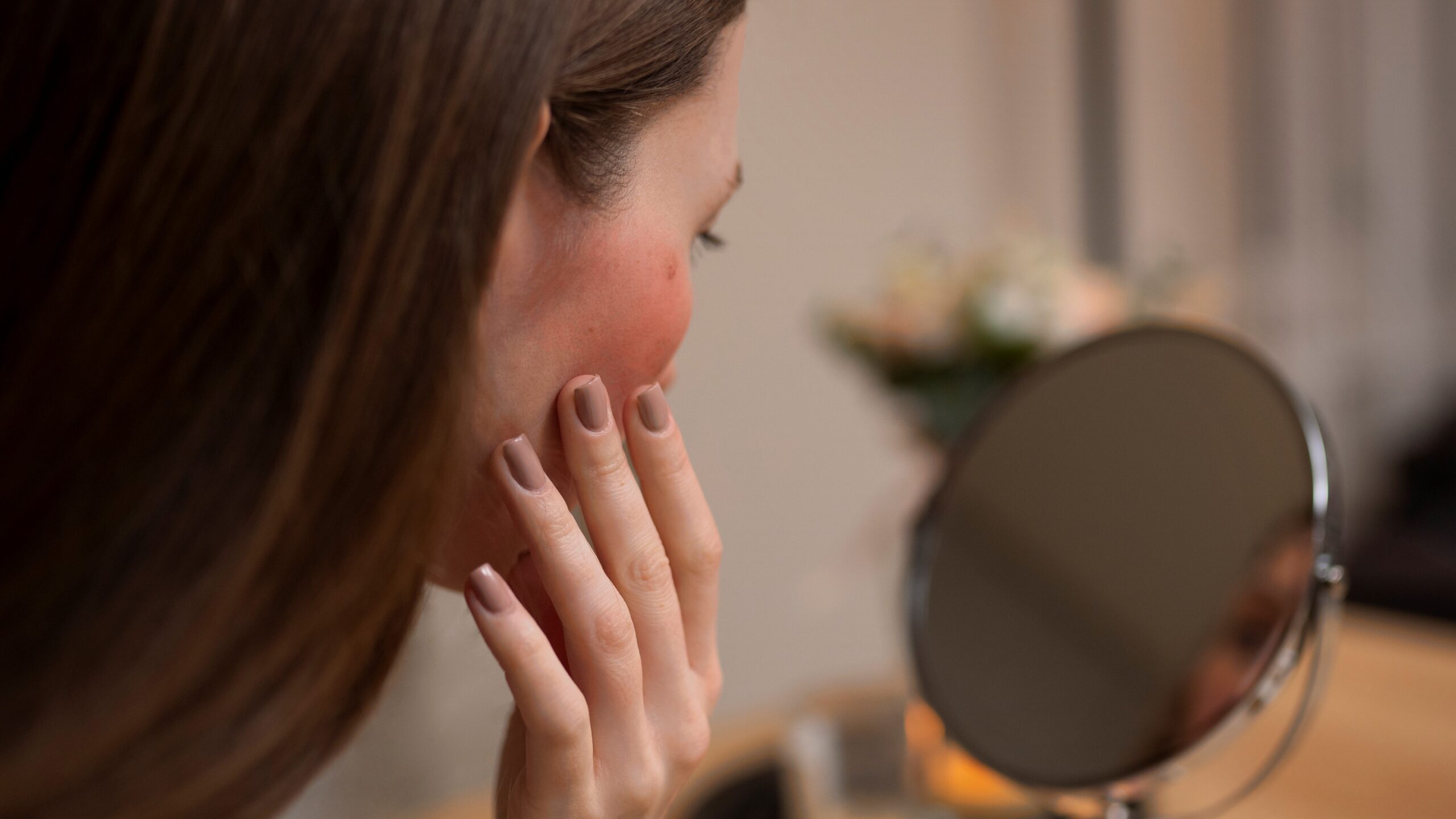
Rosacea-prone skin generally improves with a smaller, gentler routine, not more products. Most flare-ups trace back to a short, identifiable list of triggers rather than random bad luck, and once you know your own pattern, managing it becomes far more predictable.
Recognize Rosacea-Prone Skin
Common Signs
Rosacea typically shows up as persistent facial redness that doesn’t fully fade, along with visible blood vessels, a tendency to flush easily, and sometimes small bumps or pustules. It affects roughly 16 million Americans, and it tends to concentrate on the cheeks, nose, chin, and forehead.
Rosacea vs. General Sensitivity
The distinction matters because it changes how you treat it. General skin sensitivity tends to be reaction-based, it flares when you use a specific harsh product, then calms down once you stop. Rosacea is more persistent and pattern-based. The redness lingers even without an obvious recent trigger, and the underlying skin barrier is chronically more reactive to both environmental and topical triggers.
Common Triggers Worth Tracking
Skincare products are only part of the picture. A large share of rosacea flare-ups come from everyday factors that have nothing to do with what’s on your face. The most frequently reported triggers include:
- Sun exposure, reported by over 81% of rosacea patients, making it the single most common trigger
- Hot weather and heavy exercise, both of which raise skin temperature and can trigger flushing
- Wind and cold
- Alcohol, especially red wine, and hot beverages
- Spicy foods
- Emotional stress
- Certain skincare and cosmetic ingredients, covered in more detail below
Hot water specifically deserves a mention here too: it dilates blood vessels and can trigger immediate flushing, which is why dermatologists recommend lukewarm water for cleansing rather than hot.
A Minimal, Non-Provoking Daily Routine
Dermatologists consistently point to the same three non-negotiables for rosacea-prone skin, and everything else is optional on top of that foundation.
Cleanse Gently, Twice a Day
Use a mild, fragrance-free, soap-free cleanser labeled for sensitive skin. Cream or lotion formulas tend to be less drying than foaming ones. Apply with your fingertips only, never a washcloth or brush, and rinse with lukewarm water. The American Academy of Dermatology (AAD) specifically recommends cleansing twice daily, since skipping cleansing when skin feels irritated is a common mistake that actually makes things worse by letting oil and buildup accumulate on already-inflamed skin.
Moisturize to Support the Barrier
Apply a fragrance-free, non-comedogenic moisturizer to slightly damp skin after cleansing. Look for formulas with ceramides or hyaluronic acid, which reinforce the barrier rather than challenge it. This step matters more than it might seem: in one study, patients using a rosacea treatment alongside a gentle moisturizer had noticeably less dryness, peeling, and roughness after just 15 days compared to using the treatment alone.
Sunscreen, Every Day
Apply a broad-spectrum sunscreen with SPF 30 or higher every morning, year-round, even on cloudy days. Since sun exposure is the most consistently reported trigger, this single step does more to prevent flare-ups than almost anything else in the routine. If chemical sunscreens sting or irritate your skin, a mineral sunscreen with zinc oxide or titanium dioxide tends to be better tolerated, since it sits on the skin’s surface rather than absorbing into it.
Introducing Actives Carefully
Retinoids, glycolic acid, and other exfoliating acids can eventually have a place in a rosacea-prone routine, but only with caution and ideally under a dermatologist’s guidance, since they’re common triggers when introduced too quickly or at too high a concentration. Physical scrubs and any rubbing or massaging motion during cleansing should be avoided entirely, gentleness itself is part of the treatment, not just the product choice.
Where Fragrance and Common Irritants Fit In
Beyond actives, a specific list of common skincare ingredients tends to aggravate rosacea-prone skin: alcohol, fragrance (even in products labeled “natural”), glycolic and lactic acid, menthol, camphor, and sodium lauryl sulfate, a foaming agent common in cleansers. A useful rule of thumb: if a product makes your skin tingle, burn, or flush shortly after application, that’s your barrier signaling distress, not a sign the product is “working.” For a broader look at how these ingredients show up across everyday products, our post about fragrance, alcohol, and essential oils covers where they tend to hide.
Tracking Your Own Patterns
Since triggers vary meaningfully from person to person, keeping a simple log of flare-ups alongside what preceded them, weather, food, stress, new products, can help you identify your specific pattern over time. This is one of the most practical, low-effort tools available between dermatology visits, and it often reveals a trigger that wouldn’t have been obvious otherwise.
Signs to See a Dermatologist
A consistent at-home routine can reduce flare-ups and improve daily comfort, but it can’t treat moderate to severe rosacea on its own. A few signs suggest it’s time to book a professional evaluation:
- Redness that isn’t improving after several weeks of a consistent, gentle routine
- Visible blood vessels or bumps that are worsening rather than stabilizing
- Flare-ups frequent or severe enough to disrupt daily life
- Uncertainty about whether you’re actually dealing with rosacea or a different condition
A dermatologist has access to treatments beyond over-the-counter skincare, including prescription topicals like metronidazole and azelaic acid, oral antibiotics for more severe cases, and laser-based options like pulsed dye laser or IPL that target visible blood vessels directly.
The Takeaway
Consistency and trigger awareness tend to do more for rosacea-prone skin than adding new products ever will. Most people see improvement in comfort and flare-up frequency within 4 to 8 weeks of sticking to a simple, gentle routine, and a smaller routine is very often the more effective one.
FAQ
Can rosacea go away completely?
No, rosacea is a chronic condition with no known cure. A good routine can significantly reduce flare-ups and improve comfort, but it manages the condition rather than eliminating it.
Is rosacea the same as being sensitive to skincare products?
Not exactly. General sensitivity tends to be reaction-based and resolves once you stop using the offending product. Rosacea involves an underlying, chronically reactive skin barrier, so redness and reactivity tend to persist even between obvious triggers.
Can diet changes reduce rosacea flare-ups?
For many people, yes. Spicy food, alcohol, and hot beverages are commonly reported triggers, so reducing or timing these around high-exposure days can help, though the effect varies from person to person.
Sources
- “7 rosacea skin care tips dermatologists recommend”, 2024, American Academy of Dermatology
- “Rosacea Skincare Routine”, 2024, High Valley Dermatology
- “Skincare Do’s and Don’ts for Rosacea-Prone Skin”, 2026, Lakewa Dermatology
- “Skincare for Rosacea: The Physician-Formulated Routine to Stop Flare-Ups”, 2026, Image Skincare
Leave a Reply