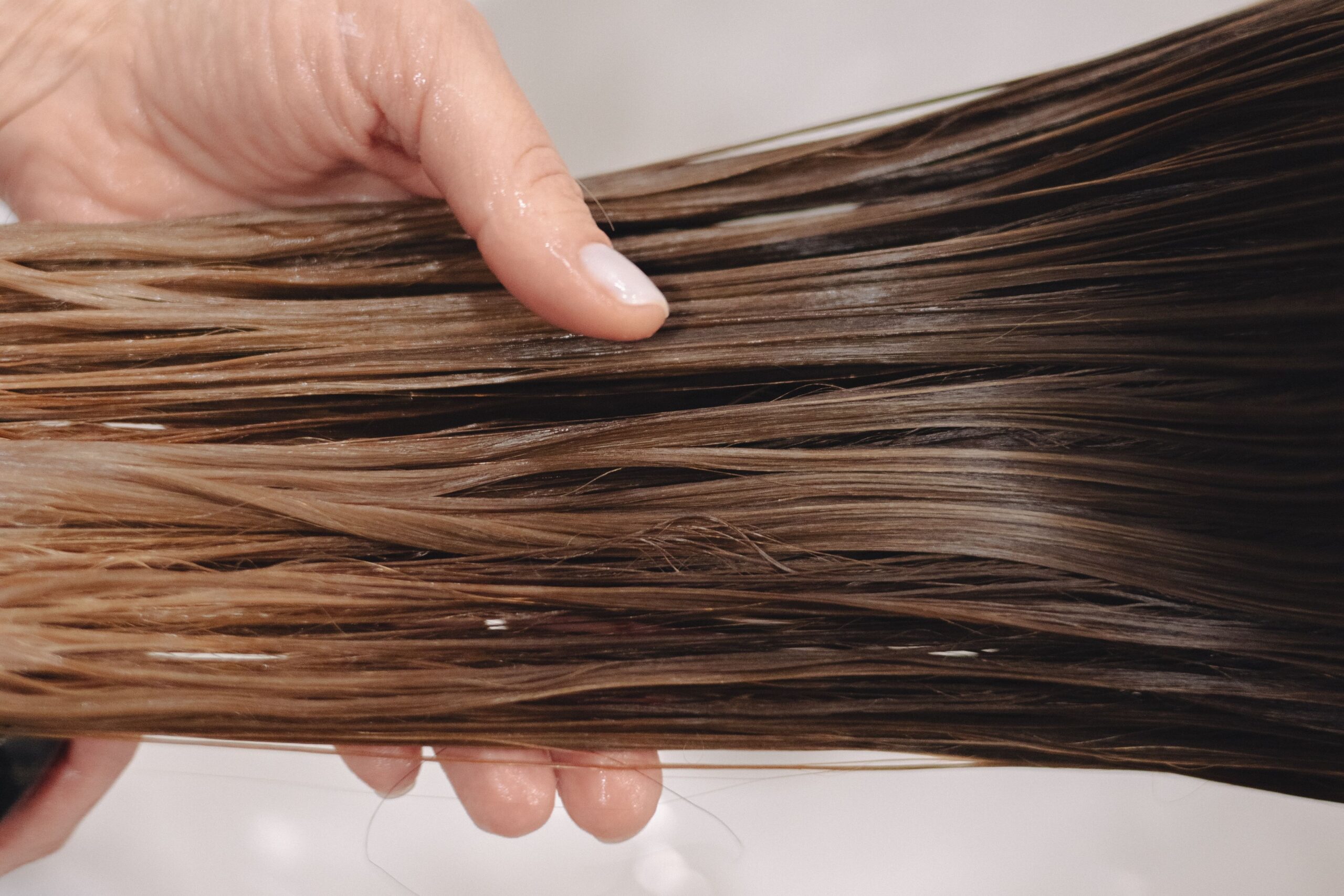
Hair that feels coated, heavy, or gritty soon after washing is often carrying product residue. Other common signs include dull strands, flat roots, powdery patches after dry shampoo, and styles that collapse within hours.
A thorough wash clears most buildup. If residue lingers, an occasional clarifying shampoo can finish the job. This guide covers how to recognize buildup, remove it safely, keep it from returning, and tell it apart from other scalp issues.
What Causes Product Buildup?
Conditioners, leave-ins, styling creams, gels, oils, sprays, and dry shampoo all leave something behind. That residue mixes with natural scalp oil, sweat, and dead skin between washes. Some of it is supposed to stay put, since a smoothing cream has to cling to the strand to do its job. Trouble starts when layers pile up faster than your wash removes them.
Several habits speed things along. Heavy styling days, frequent dry shampoo, and long gaps between washes all contribute. So does shampoo you rinse out in a hurry. Thick or textured hair holds onto product more easily, too, because there’s more surface for it to cling to.
Rich formulas stick around longer than light ones. A butter-based mask or thick styling cream takes more effort to remove than a watery spray, so heavier products are often the usual suspects when hair starts feeling weighed down.
Signs of Product Buildup
No single sign confirms it, but a pattern usually stands out.
| What you notice | Likely cause | What to try |
|---|---|---|
| Hair feels coated, waxy, or heavy | Layered conditioner, creams, or oils | A thorough wash and full rinse |
| Gritty texture or visible powder at the roots | Dry shampoo that hasn’t been washed out | Shampoo and water |
| Dull hair that looks flat soon after washing | Residue weighing down the strands | Smaller product amounts, then a clarifying wash if needed |
| Styling products stop working as well | Old product blocking new layers | A reset wash |
| Itching with flakes | Dandruff, dryness, or irritation | Shampoo made to address flaking |
Dry shampoo needs a special mention. It absorbs oil without cleansing the scalp, so it works as a between-wash refresh and can’t replace shampoo. When it piles up, hair often turns stiff and gritty.
Timing offers another clue. If your hair feels fine on wash day and turns heavy by day two or three, product layers are a likely cause. If it feels coated right after you wash and rinse, it may need a stronger cleanse.
How to Remove Product Buildup
Start With a Thorough Wash
Many cases clear up without special products. Shampoo applied to the scalp lifts away accumulated products, oil, and dead skin, so give that step proper attention.
- Wet your hair and scalp completely.
- Work shampoo across your whole scalp, including the nape and the underside of your hair.
- Massage with your fingertips for about a minute.
- Rinse until no suds or slippery film remain.
- Apply conditioner to the lengths and ends, then rinse again.
Rinsing is the step people shortchange most. Leftover shampoo can irritate the scalp, and leftover conditioner adds to the coated feel you’re trying to remove. Spending an extra 30 seconds under the water often makes a bigger difference than you think.
If your hair is long or thick, section it before shampooing. That way, the lather reaches the scalp in every area, and you don’t miss the back or underneath.
Use Clarifying Shampoo When Residue Lingers
Clarifying shampoos are formulated to cleanse more strongly than everyday shampoos, which makes them good at lifting heavy styling products and oils. Reach for one when a careful regular wash still leaves your hair feeling coated.

Check the label for how often to use it, and start with an occasional wash instead of a fixed weekly routine. These formulas cleanse strongly, so they can leave hair feeling extra dry. Follow with conditioner every time. If your hair is colored, pick a formula that states it’s safe for color-treated hair.
The goal is clean, light hair. A squeaky or tangled feel means the wash was harsher than your hair needs, so wait longer before the next one.
Fine hair and curly hair respond a little differently. Fine strands tend to show buildup first because they flatten under even small amounts of product. Curly or coily hair is often drier to begin with, so it benefits from a moisturizing conditioner or mask right after clarifying.
Skip the Harsh Fixes
Do-it-yourself detox mixes, such as baking soda pastes or undiluted vinegar, lack reliable evidence for removing buildup and can irritate skin. Avoid hard scrubbing, especially on a scalp that already feels tender. Daily clarifying washes tend to dry hair out, too.
How to Keep Buildup From Coming Back
A few small routine adjustments do most of the work.
- Use less product. Start with a pea-sized amount of cream or a few drops of oil, then add more only if your hair needs it.
- Place products where they belong. Keep leave-ins and oils on the mid-lengths and ends unless the label says otherwise.
- Treat dry shampoo as a stopgap. Plan to wash with shampoo and water after a day or two.
- Match your wash schedule to your hair. Needs vary widely. Dry, curly, straight, or thick hair needs different routines.
- Simplify layering. If you apply a leave-in, a cream, and an oil at once, try dropping one and see whether your hair feels lighter.
- Choose lighter formulas for daily use. Save heavy masks and butters for wash days, when you’ll rinse them out soon after.
Product layering can also play a part when hair feels dry even though you’re using plenty of products. If that sounds familiar, take a look at why hair stays dry despite everything you use.
When It’s Not Buildup
Some symptoms resemble buildup but come from something else.
- Dandruff. Itchy, flaking skin on the scalp needs a shampoo made to address flaking, and a clarifying formula doesn’t do that job.
- Dry scalp. It can look a lot like dandruff, and it’s easy to confuse the two.
- Seborrheic dermatitis. This condition causes itchy, scaly, sometimes greasy patches that don’t respond to extra washing.
- A reaction to a product. Itching, redness, or stinging that started after you switched shampoos or added a new styler points to irritation.
If your symptoms don’t clear after a good wash, don’t keep escalating to stronger cleansers. For everyday scalp upkeep, our guide to treating your scalp like skin covers the basics.
Conclusion
Product buildup is common, and it’s easy to fix. Begin with a thorough wash and a full rinse. Use a clarifying shampoo only if the coated feeling sticks around, then condition afterward. Then trim your product layers and lean less on dry shampoo, so the residue has less chance to return.
If flakes and itching stay put, you’re likely dealing with something other than buildup, and the right fix will be different.
FAQs
How Do I Know If My Hair Has Product Buildup?
Look for a coated or heavy feel, dull strands, flat roots shortly after washing, or grit from dry shampoo. Itching with flakes suggests something other than residue.
How Often Should I Use Clarifying Shampoo?
Follow the product’s directions, and use it only when a thorough regular wash leaves residue behind. Always follow with conditioner. If your hair feels dry or rough afterward, space your washes further apart.
Can Dry Shampoo Cause Buildup?
Yes, especially with repeated use. Dry shampoo absorbs oil but doesn’t cleanse, so the powder and oil stay on your scalp until you wash.
Is Product Buildup the Same as Dandruff?
No. Buildup is leftover product mixed with oil and skin cells. Dandruff is a scalp condition that causes itchy flaking, and it responds to different ingredients than a clarifying shampoo does.
Leave a Reply