

Yes, you can use body scrubs in winter, as long as your skin stays comfortable after exfoliation. Cold weather, low humidity, and indoor heating can dry out your skin and make it more sensitive, so your usual exfoliation routine may feel harsher than it did in summer. You may need to use a lighter touch or wait longer between sessions.
Before reaching for a scrub, consider whether you’re dealing with rough texture or already irritated skin. Exfoliation can smooth rough patches, while tightness, itching, and soreness call for more moisture. Below, we’ll help you recognize the difference so you can decide when to exfoliate and when to give your skin a break.
Does Dry Winter Skin Need Exfoliation?
Dryness and rough texture often appear together, but they have different causes and require different care.
Exfoliation removes dead skin cells that build up on the surface, helping reduce roughness and uneven texture. Moisturizers attract water, retain moisture, or reduce water loss. Although some products combine these benefits, exfoliation won’t replenish the moisture that dry skin needs. Over-scrubbing can even worsen flaking and irritation.
Identifying your skin’s condition is a useful starting point when deciding whether to exfoliate.
When your skin feels comfortable but slightly rough
If your skin feels healthy overall but has some rough or uneven patches, gentle exfoliation can help smooth its surface. You can keep using a body scrub you’ve tolerated well, reducing the pressure or frequency if your skin gets drier in winter.
Apply moisturizer afterward to keep the skin hydrated. Check how it feels over the next few hours: persistent tightness or tenderness may mean you need to adjust your routine.
When dryness comes with tightness or itching
If your skin feels tight after showering or becomes itchy throughout the day, it needs more hydration. Rather than scrubbing away visible flakes, simplify your routine and give your skin a chance to recover.
Use a gentle cleanser, keep showers warm rather than hot, and apply a moisturizing cream or ointment after bathing. Reduce exfoliation on affected areas until the discomfort subsides.
When the skin stings, cracks, or feels sore
Leave cracked, painful, or visibly irritated skin alone until it heals. Scrubbing at this stage can aggravate the affected area and prolong discomfort.
Check our previous blog on damaged skin barrier to help identify the condition.
Why Winter and Dry Indoor Air Can Change Your Routine
Winter conditions can make it harder for skin to retain moisture. Cold outdoor air is often dry, and indoor heating further reduces moisture in the air. Together, these conditions can leave skin feeling rough, tight, and uncomfortable.
This also explains why a body scrub that worked well during summer and fall may feel too harsh in winter. Environmental changes can affect your skin’s tolerance, even when you’re using the same product.
Low humidity can have a similar effect in warmer climates. If you live somewhere dry year-round, indoor humidity and consistent moisturizing are crucial throughout the seasons. A humidifier can help raise indoor humidity when levels are particularly low.
Choosing Between Body Scrubs and Other Exfoliants
Body scrubs are one way to smooth rough skin, but other products can help remove surface buildup with different application methods. Exfoliating gloves, body washes, and leave-on lotions each have their own characteristics.
| Product type | How it works | Considerations for dry skin |
|---|---|---|
| Granular body scrub | Particles physically loosen dead skin cells through massage. | Particle size, texture, and application pressure affect how abrasive it feels. |
| Exfoliating glove or cloth | Fabric friction helps remove dead skin cells from the surface. | Rough materials and vigorous rubbing can aggravate dryness. |
| Exfoliating body wash | Contains exfoliating ingredients in a rinse-off cleanser. | Check the active ingredients and how often you should use the product. |
| Exfoliating lotion | Leave-on ingredients gradually smooth rough texture. | Some formulas also contain moisturizing ingredients, but stronger formulas may irritate sensitive skin. |
Physical exfoliation relies on friction, whereas chemical exfoliation uses ingredients to loosen the bonds between dead skin cells. They can improve texture, but repeated rubbing may be particularly uncomfortable for dry or sensitive skin.
Body scrubs, gloves, and cloths
If you enjoy using a traditional body scrub, you can keep it in your winter routine as long as your skin tolerates it. Use a small amount and massage gently, avoiding repeated passes over the same area.
Exfoliating gloves and cloths provide another form of physical exfoliation. Their texture matters: softer materials create less friction, while coarse fabrics can be too abrasive for already-dry skin.
When choosing a scrub, look beyond the exfoliating particles. Sugar and salt are common ingredients, but particle size, fragrance, and the overall formulation also influence how your skin responds.
Exfoliating washes and lotions
Exfoliating body washes are convenient for shower routines, while leave-on lotions help address rough texture between showers.
Some lotions combine exfoliating and moisturizing ingredients. For example, lactic acid helps smooth dry, flaky skin, while urea softens rough areas and improves moisture retention. These ingredients are particularly common in products designed for dry or rough body skin.
How to Use a Body Scrub in Winter
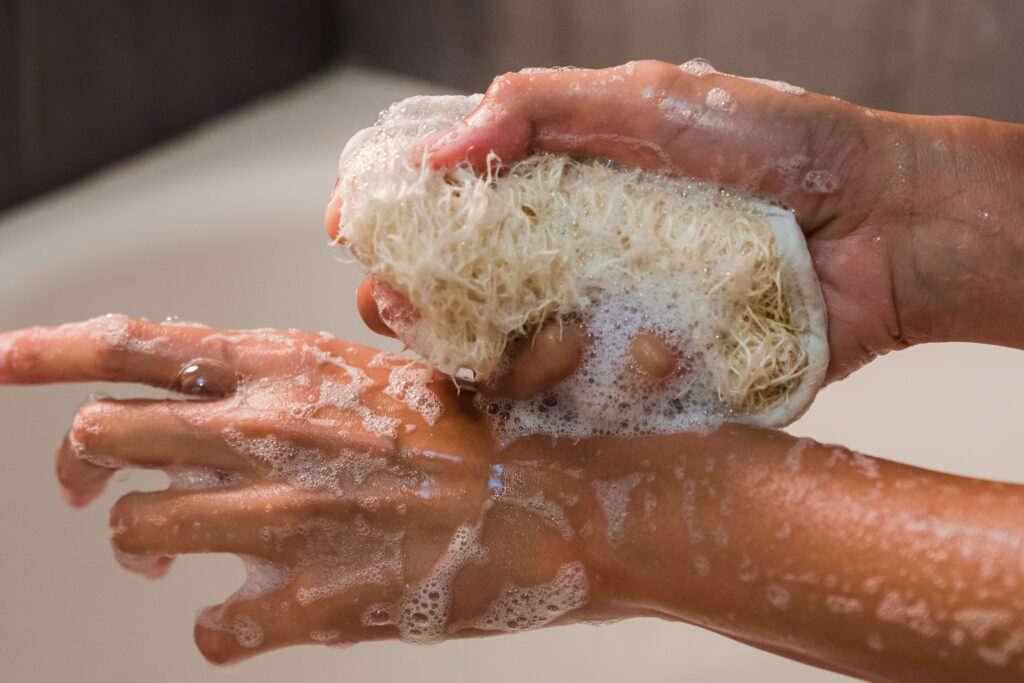
Your shower habits and application technique can affect skin comfort as much as the scrub itself. A few adjustments can help reduce unnecessary dryness and friction.
Keep the water warm and the shower brief
Hot water can strip the skin’s natural oils, leaving it feeling dry after bathing. Keep showers warm, not hot, and keep them short.
If dryness continues even on days when you skip exfoliation, review your shower habits and skincare products. Water temperature, shower length, and your cleanser choice could all cause problems.
Use light, controlled movements
Apply a small amount of scrub to damp skin and massage using gentle circular movements. Avoid pressing hard or repeatedly working over particularly rough areas. When using an exfoliating glove or cloth, light strokes are usually sufficient.
How Often Should You Exfoliate in Winter?
There isn’t an exfoliation schedule that works for everyone. Frequency varies with the product’s formulation, exfoliating strength, and your skin’s tolerance.
If your current routine has been comfortable, use it as a starting point. Pay attention to changes over time:
- Skin stays comfortable: If roughness improves without lingering dryness or irritation, your current frequency is suitable.
- Tightness develops between sessions: Increase the time between exfoliation and focus on moisturizing.
- If itching, tenderness, or redness appears: Stop exfoliating and let the skin recover.
Also consider how your skin feels later in the day and the following morning.
What to Do While Taking a Break From Exfoliation
While your skin recovers, keep your body-care routine simple. Wash with a gentle cleanser, avoid hot showers, and reapply moisturizer as needed throughout the day.
Regular moisturizing can also improve rough texture over time by softening dry, flaky skin. Some areas may need less exfoliation once they’re properly hydrated.
When your skin feels comfortable again, you can gradually reintroduce an exfoliant. Start gently and give your skin time to respond.
Keeping Skin Smooth and Comfortable Through Winter
Body scrubs or exfoliation products can stay in your winter skincare routine if your skin tolerates exfoliation. Gentle scrubbing can improve rough texture, while dry, itchy, or irritated areas benefit more from moisturizing and recovery.
As temperatures and humidity change, your skin may need a few adjustments to its usual routine. Keep showers comfortable, avoid excessive friction, and stay consistently hydrated. These simple habits can help you enjoy smoother, softer skin throughout the colder months.
Q&A
Can I use a body scrub if my skin is flaky?
It depends on whether the flaking comes with other signs of irritation. If your skin feels comfortable and has mild surface roughness, gentle exfoliation may help. However, tightness, itching, soreness, or cracks suggest that your skin needs moisturizing care instead. Dryness can cause flaking, so consider your skin’s overall condition before using a scrub.
Is a sugar scrub good for dry winter skin?
Sugar scrubs can suit dry skin when the formula is well tolerated and applied gently. However, remember to also consider the particle texture, fragrance, and other ingredients when choosing a product.
Can I use an exfoliating lotion instead of a scrub?
Yes. An exfoliating lotion is a good alternative if you prefer to avoid manual rubbing. Products containing lactic acid can help smooth flaky skin, while urea-based formulas can soften rough areas and improve hydration.
Do these adjustments apply if I live somewhere warm but dry?
Yes. Low humidity can contribute to skin dryness regardless of the temperature outside. If you live in a dry climate, regular moisturizing, shorter showers, and moderate exfoliation can help keep your skin comfortable year-round.
Leave a Reply