
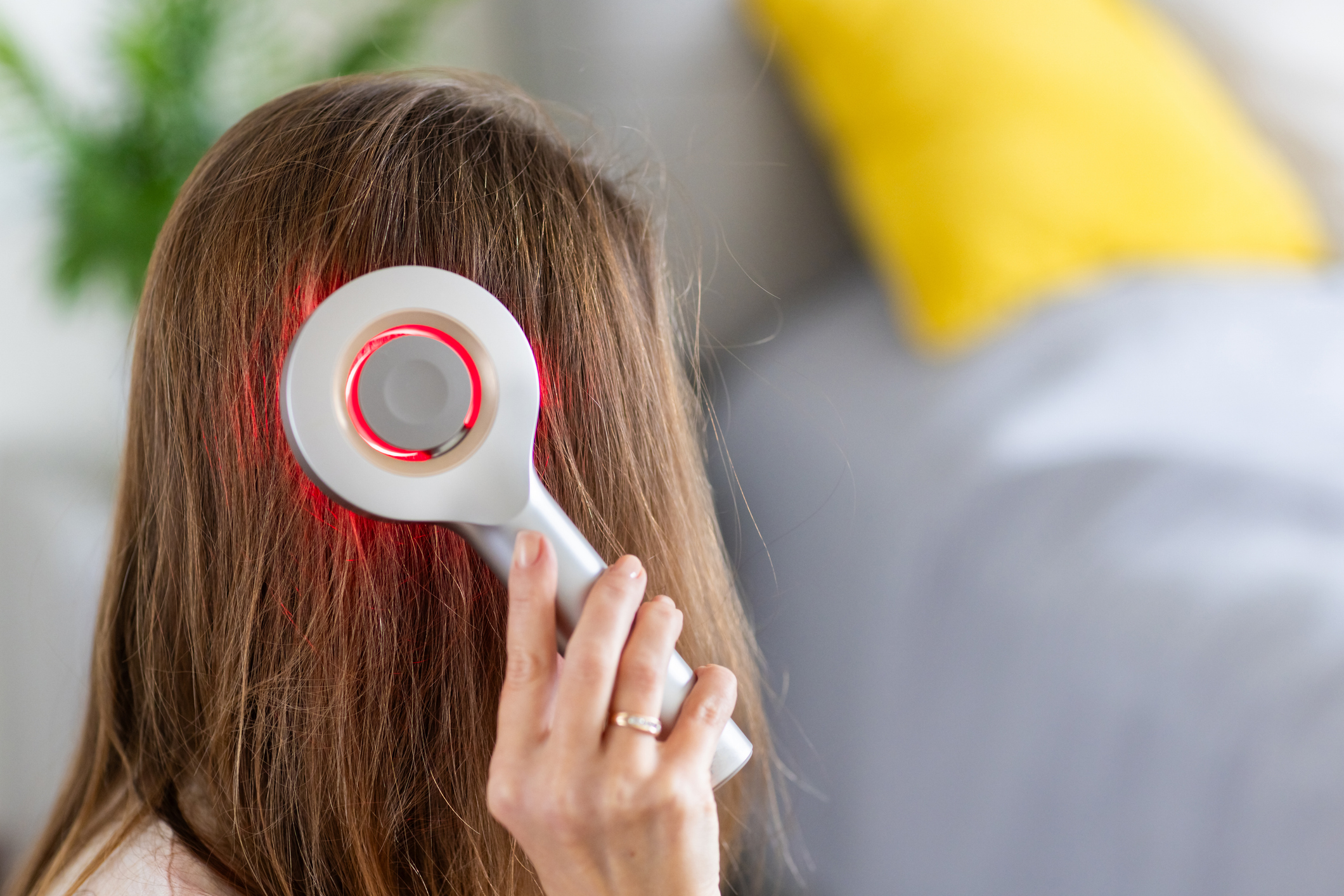
Finding more hair in the shower drain or on your pillow creates a specific kind of worry that most skin concerns do not. Hair loss feels harder to reverse, and the internet is full of devices claiming to fix it.
Here is the part most product pages skip: not all thinning has the same cause, and not every at-home device works on every cause. A LLLT device built for pattern hair loss will do very little for shedding triggered by stress or a nutrient deficiency. Getting the diagnosis right matters more than picking the “best” device on a review list.
In this guide:
- The different causes of thinning and which ones respond to devices
- How red light and laser cap devices actually work on hair
- What the clinical evidence shows, and where it falls short
- How to build a realistic routine, starting with scalp health
Scalp condition underpins all of this. If you have not already, our scalp care routine guide is worth reading first, since a compromised scalp barrier limits how well any device or treatment can work.
Not All Thinning Has the Same Cause
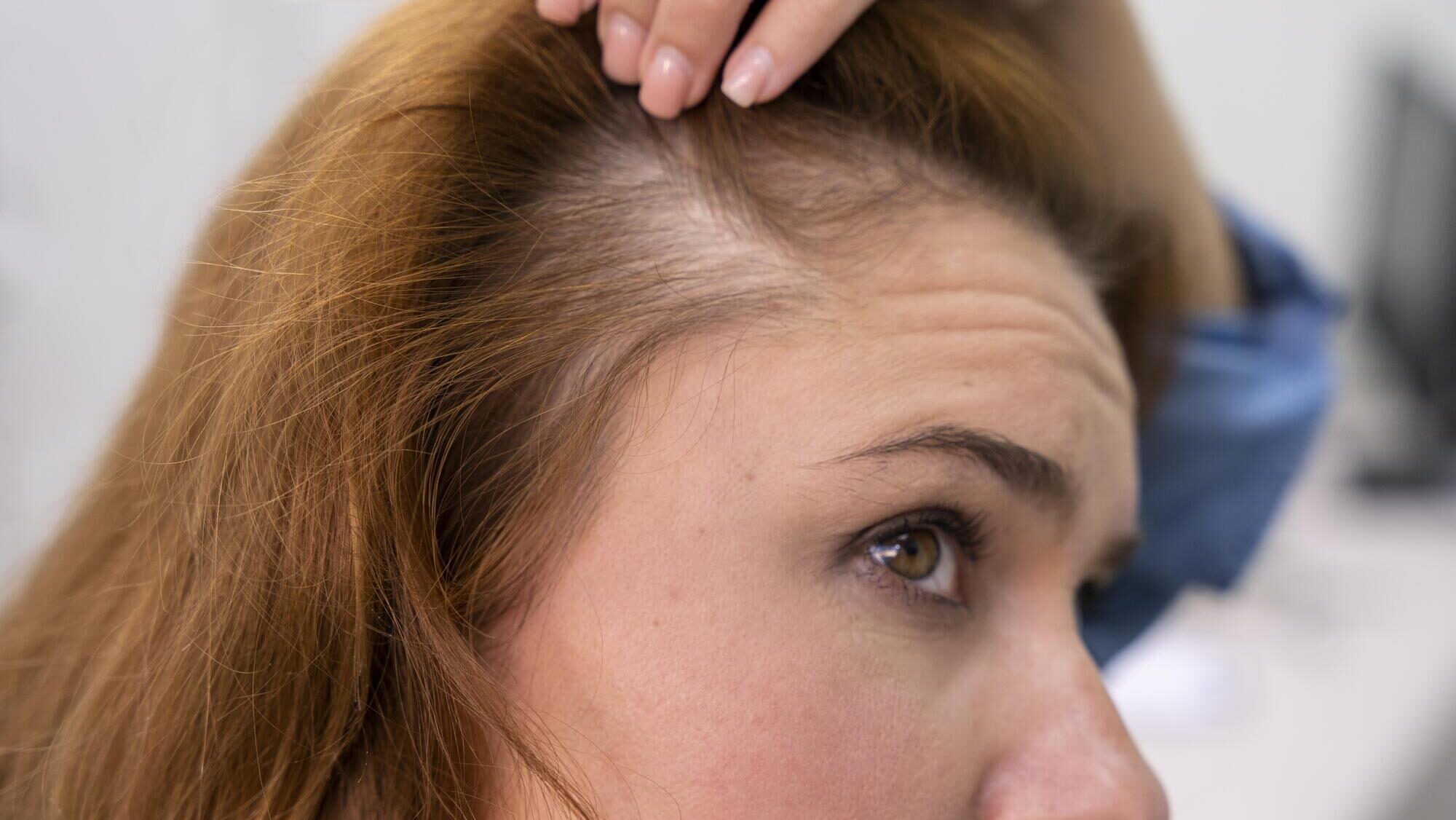
This is the step most hair-loss content skips entirely, and it is the one that determines whether a device will help at all.
| Type of hair loss | Common cause | Responds to red light or laser devices? |
|---|---|---|
| Androgenetic alopecia (pattern thinning) | Genetic sensitivity to DHT | Yes, strongest evidence category |
| Telogen effluvium (diffuse shedding) | Stress, illness, hormonal shifts, postpartum | Limited, may support recovery speed but not the root cause |
| Nutrient-deficiency thinning | Low iron, vitamin D, or protein | No, requires correcting the deficiency first |
| Traction or breakage | Tight styling, heat damage | No, this is mechanical damage rather than a follicle-level issue |
Androgenetic alopecia, often called pattern thinning, is the type with the strongest research behind at-home light devices. If shedding started suddenly, comes in patches, or is accompanied by scalp pain, itching, or other symptoms, that points toward a different cause and is worth discussing with a doctor before buying any device.
How Red Light and Laser Devices Work on Hair
Low-level light therapy, or LLLT, uses specific red and near-infrared wavelengths that are absorbed by mitochondria in hair follicle cells. This is thought to extend the growth, or anagen, phase of the hair cycle and improve blood flow to the follicle.
This is a different category from the red and blue LED devices covered in our LED therapy guide for skin. Hair-focused LLLT devices use different wavelength specificity, are delivered through caps, helmets, or combs rather than flat masks, and target the follicle rather than the skin surface. The underlying light-based mechanism is related, but the application and evidence base are distinct.
Several LLLT devices for hair are FDA-cleared specifically for androgenetic alopecia. That does not mean every device on the market has gone through the same rigor, so checking for FDA clearance is a reasonable filter when comparing products.
What the Evidence Shows
The research on LLLT for androgenetic alopecia is more established than for most at-home beauty devices.
- A meta-analysis covering over 3,000 patients found significant increases in hair density after 4 to 26 weeks of treatment, with the effect size actually growing stronger after 20 weeks of use.
- A 24-week trial found the treated side of the scalp had significantly greater hair coverage than the sham-treated side by the study’s end, with improvements in hair thickness, count, and coverage visible from the 12-week mark onward.
A few honest caveats:
- Results are real but modest. Most studies show improved density and reduced shedding rather than dramatic, filled-in regrowth.
- The evidence is strongest for androgenetic alopecia specifically. For telogen effluvium, alopecia areata, and other alopecia types, data exists but is far more limited.
- LLLT appears to work well as an addition to minoxidil, not just as a standalone option.
- Device use does not replace medical evaluation, especially when hair loss is sudden, patchy, or paired with other symptoms.
Comparing Device Formats
| Device format | Typical session length | Best for |
|---|---|---|
| Laser cap/helmet | 15–20 minutes, several times weekly | Full-scalp coverage and consistency |
| Comb/brush device | 8–15 minutes | Lower cost, targeted use along the part line |
| Helmet with dense diode array | 20–25 minutes | Higher diode density for broader coverage |
Interestingly, the meta-analysis on comparative effectiveness found that device type, whether comb or helmet, did not significantly affect outcomes, and that lower treatment frequency actually showed a stronger effect than higher frequency. In practice, this means the best device is the one a person will realistically use several times a week for months, not necessarily the one with the most diodes or the highest price tag.
Building an At-Home Routine
- Identify the type of thinning if possible. See a doctor if the shedding is sudden, patchy, or comes with other symptoms, since this changes the entire approach.
- Address scalp health first. A healthy scalp barrier supports better outcomes from any hair treatment.
- Introduce an LLLT device 3 to 4 times weekly, at a consistent time, since adherence matters more than intensity.
- Consider pairing with minoxidil if pattern thinning is confirmed and you are comfortable with that option, ideally after speaking with a doctor or pharmacist.
- Reassess at 12 and 24 weeks, using photos taken in consistent lighting rather than relying on day-to-day impressions, since progress is gradual and easy to miss.
The Bottom Line on Devices for Thinning Hair
An at-home light device is not a guaranteed fix, and it will not help every type of hair loss. But for pattern thinning specifically, it is one of the few non-prescription options with solid clinical research behind it, including FDA clearance and multiple studies showing measurable improvement.
The steps that matter most: identify the type of thinning before buying anything, give any device a full 12 to 24 week window before judging results, and treat scalp health as the foundation everything else is built on.
FAQ
Do laser caps really work for hair loss?
For androgenetic alopecia specifically, yes. Multiple studies show statistically significant improvements in hair density and thickness.
How long before I see results from a red light hair device?
Reduced shedding is often the first sign, typically around 8 to 12 weeks. Visible density improvements usually take 16 to 24 weeks, with some studies showing continued improvement after 20 weeks.
Can I use a hair growth device if I do not know why I am thinning?
It is better to identify the cause first. Devices with strong evidence are specific to androgenetic alopecia, and they will not address thinning caused by nutrient deficiency, stress-related shedding, or traction damage.
Is it safe to use a hair device and minoxidil together?
Research suggests the combination can be more effective than either alone. Check with a doctor or pharmacist before combining treatments.
Sources:
- “Role of Low-Level Light Therapy (LLLT) in Androgenetic Alopecia” PMC NIH, 2021. pmc.ncbi.nlm.nih.gov/articles/PMC8906269/
- “Comparative effectiveness of low-level laser therapy for androgenetic alopecia.” PubMed, 2019. pubmed.ncbi.nlm.nih.gov/30706177/
- “Low-Level Laser and LED Therapy in Alopecia.” PubMed, 2025. pubmed.ncbi.nlm.nih.gov/39404126/
- “Low-level laser therapy as a treatment for androgenetic alopecia” Lasers in Surgery and Medicine, 2016. onlinelibrary.wiley.com/doi/10.1002/lsm.22512
- “Low-level light therapy using a helmet-type device for the treatment of androgenetic alopecia.” journals.lww.com/md-journal/fulltext/2020/07170/low_level_light_therapy_using_a_helmet_type_device.73.aspx
- “The effectiveness of treatments for androgenetic alopecia: a systematic review and meta-analysis.” PubMed, 2017. pubmed.ncbi.nlm.nih.gov/28396101/
Leave a Reply