
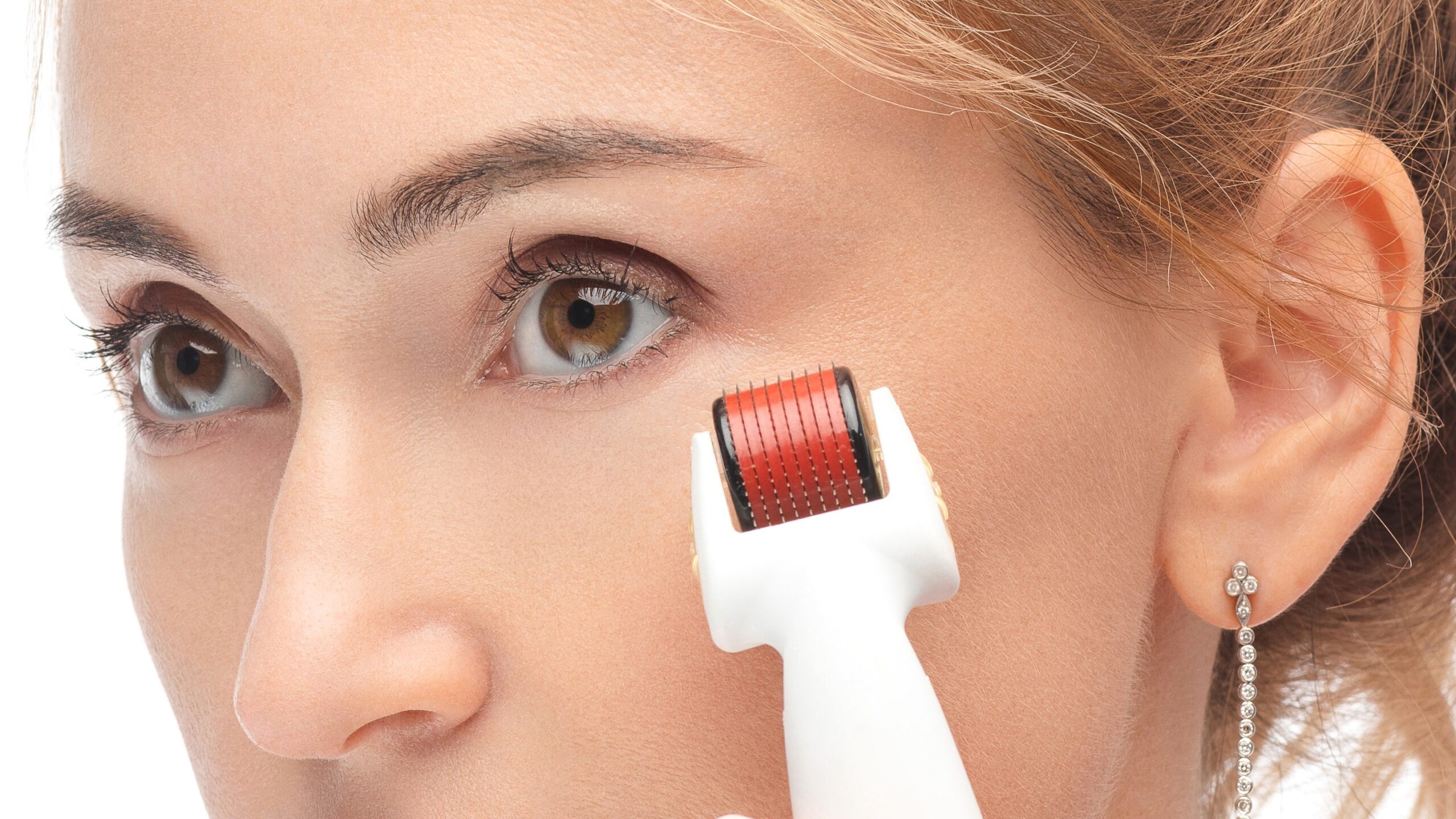
Microneedling has become one of the most talked-about at-home skincare tools, but not all devices work the same way. Derma rollers, derma stamps, and microneedling pens all create tiny micro-injuries to trigger your skin’s natural repair process. The difference comes down to motion, control, and how deep each tool is legally allowed to go.
Quick Comparison: Rollers vs. Stamps vs. Pens
| Device | Typical Home Depth | Best For | Main Risk |
|---|---|---|---|
| Derma roller | ~0.2–0.5 mm | Large, flat areas | Micro-tears, “tram track” scarring |
| Derma stamp | ~0.25–1.0 mm | Targeted spots | Lower risk, but slower coverage |
| Microneedling pen | ~0.25–1.0 mm+ adjustable | Precision and consistency | Overuse from imprecise settings |
Derma Rollers: How They Work

A derma roller has a cylindrical head covered in fine needles that rolls across your skin. As the roller moves, needles enter and exit at an angle rather than straight down.
This angled motion spreads stimulation across a wider area quickly. It’s part of why rollers feel intuitive to use, especially on curved areas like cheeks and jawlines. But that same angled entry increases the risk of micro-tears, sometimes called “tram track” scarring, especially with heavy pressure or frequent overuse.
Derma Rollers work well for:
- General maintenance and mild texture concerns
- Larger, flatter areas like the forehead or body
- Boosting how well serums absorb after use
They’re less effective for precise, small-area treatment, since the rolling motion doesn’t concentrate on one exact spot.
Derma Stamps: How They Work
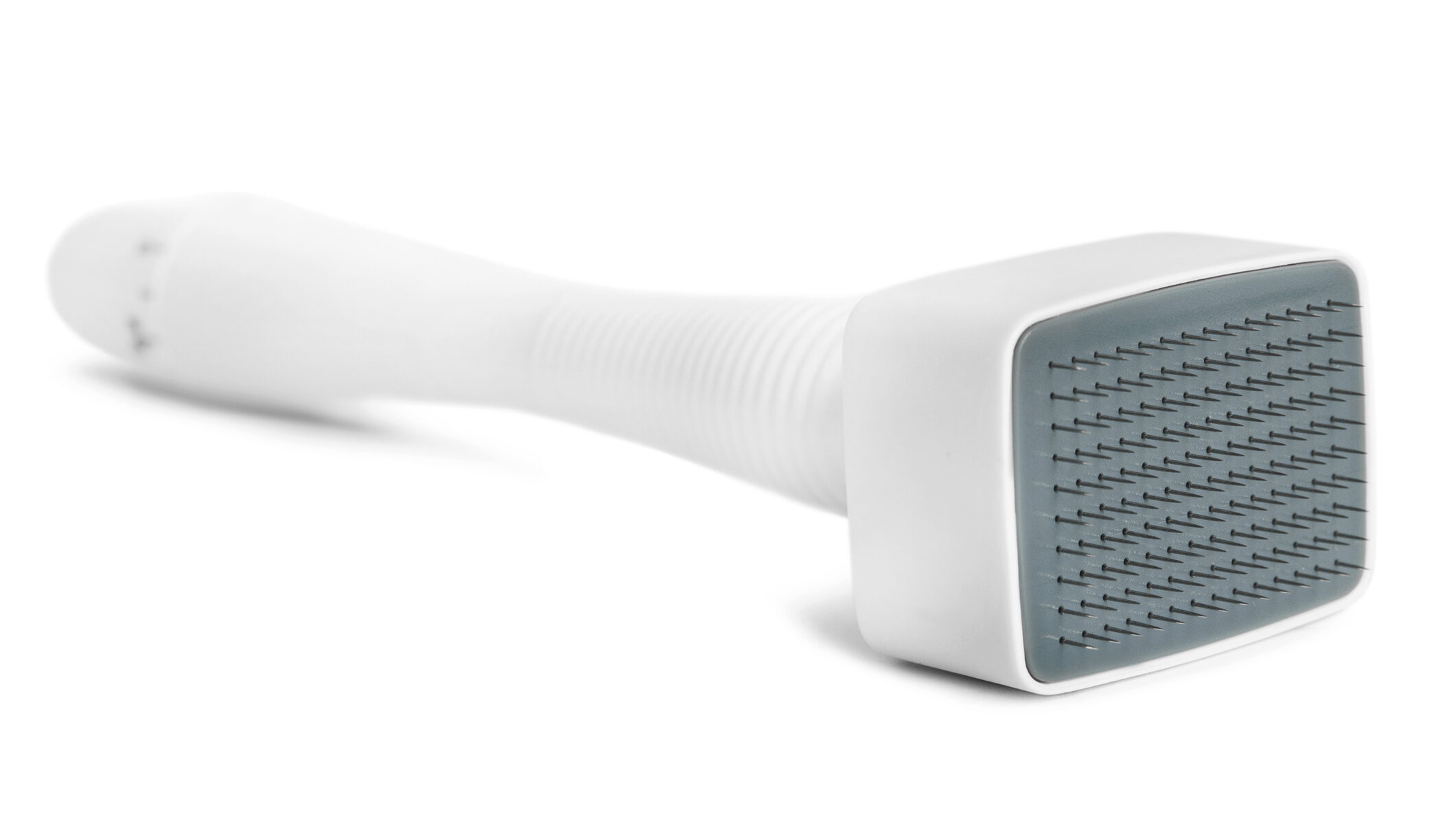
A derma stamp has a flat head that presses straight down into the skin and lifts straight back out. There’s no rolling or dragging motion involved.
This vertical, controlled entry is considered gentler than a roller’s angled approach. Because the stamp treats one section at a time, it’s easier to target specific concerns without affecting surrounding skin.
Derma Stamps work well for:
- Acne scars or fine lines in specific spots
- Areas around the eyes or nose that rollers can’t reach easily
- Beginners who want more control over technique
The tradeoff is speed. Stamps take longer to cover larger areas compared to a roller.
Microneedling Pens: How They Work
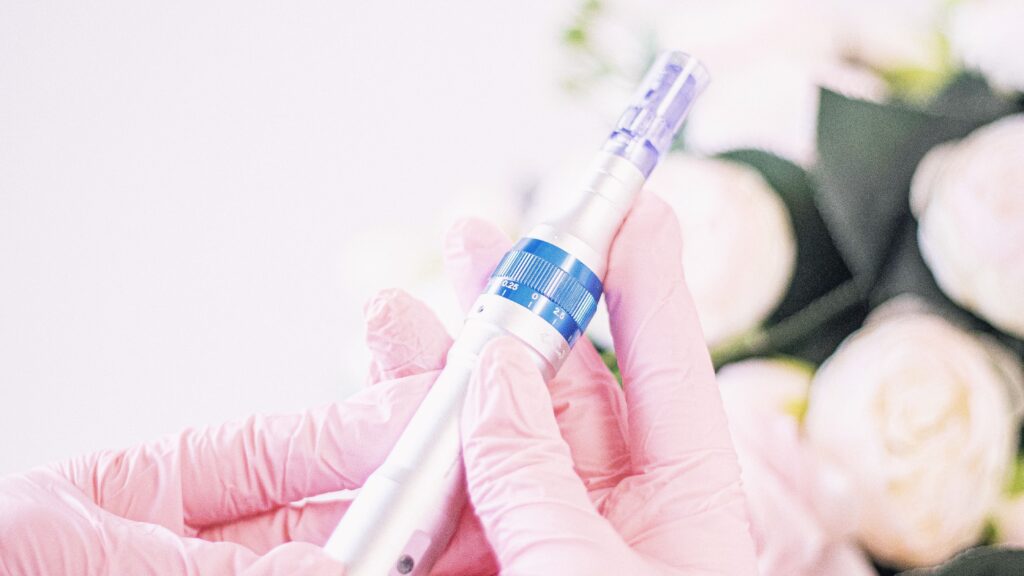
A microneedling pen uses a small motor to move needles up and down rapidly, rather than relying on manual pressure. Many models let you adjust the needle depth with a dial.
This motorized action creates more consistent, even micro-channels than a manual tool, since the depth and speed stay steady throughout each pass. Pens also tend to offer more precision for people comfortable with the added technique required.
One important correction here. Some guides recommend numbing cream before using a pen, but dermatologists actually advise against it for at-home use. At the shallow depths legally allowed for home devices, the procedure shouldn’t cause significant pain in the first place. Removing pain feedback with numbing cream makes it easier to press too hard or unknowingly go too deep, which is one of the more common ways people end up with irritation or scarring from DIY use. Numbing creams also carry their own risk of skin irritation or, in rare cases, more serious reactions when applied too heavily or too often without professional guidance.
Needle Depth and FDA Regulation
Here’s where a lot of marketing gets misleading. The FDA does not classify microneedling devices based on a specific needle-depth cutoff. Instead, classification depends largely on the device’s intended use and marketing claims, along with whether it penetrates living skin layers.
A few key facts worth knowing before you shop:
- If a device is intended only to exfoliate the stratum corneum (the top, non-living layer of skin) and marketed simply to improve skin’s look, smoothness, or luminance, it generally is not regulated as a medical device
- If a device is designed or marketed to penetrate living skin tissue or is intended to treat specific conditions such as acne scars, wrinkles, or scarring, it may fall under medical device regulation because those claims indicate an intent to affect the structure or function of the body
- Many consumer microneedling tools with short needles are marketed as cosmetic products for this reason, positioned around exfoliation and product absorption rather than treating a specific condition
- No microneedling device has been cleared by the FDA specifically for over-the-counter home treatment. FDA-cleared microneedling devices are intended for use by qualified healthcare professionals
How to Check Before You Buy
A few minutes of research before purchasing can save you from buying a device that’s mismatched for home use:
- Read what the product actually claims to do. Devices described only as exfoliating or improving skin’s appearance are typically the cosmetic-category products intended for home use
- Be cautious of home devices that claim to treat acne scars, wrinkles, or other named skin conditions, since that kind of claim is what may trigger FDA medical device regulation in the first place
- If a device claims “FDA clearance,” search for the specific clearance and confirm whether it applies to professional use or covers home use
- Avoid devices that advertise going deeper into living skin layers while being sold for unsupervised home use
- Consult a medical professional before you consider buying any device
Clinic Microneedling Options
Clinics generally offer two distinct microneedling options, not just one, and understanding the difference helps explain why professional treatment reaches results home devices can’t.
Traditional professional microneedling (like SkinPen, the first FDA-cleared device in this category) uses mechanical needling alone, typically at depths up to around 2.5mm. It’s purely mechanical, with no added energy source, and it’s well suited for texture, mild acne scars, enlarged pores, and general skin dullness.
RF microneedling (devices like Morpheus8, Virtue RF, or Potenza) takes that same needling mechanism and adds radiofrequency energy delivered through the needle tips. As the needles reach the dermis, RF energy heats the deeper tissue layers, creating a stronger collagen-stimulating effect on top of the mechanical injury alone. This combination is why RF microneedling tends to produce more noticeable skin tightening and is generally recommended for deeper wrinkles, more pronounced scarring, and skin laxity, concerns that traditional microneedling alone doesn’t address as effectively.
FAQ
Which is safest for beginners: roller, stamp, or pen?
A derma stamp is generally considered the most beginner-friendly, since its straight up-and-down motion gives more control than a roller’s angled movement or a pen’s motorized speed.
Do at-home microneedling devices actually work?
Yes, for mild texture and product absorption improvement, but results build gradually and won’t match the depth or intensity of professional treatments.
Sources
- “Microneedling Devices”, 2025, U.S. Food and Drug Administration
- “Microneedling Devices: Getting to the Point on Benefits, Risks, and Safety”, 2025, U.S. Food and Drug Administration
- “Medical Devices; General and Plastic Surgery Devices; Classification of the Microneedling Device for Aesthetic Use”, 2018, Federal Register
- “List of FDA-Approved Microneedling Devices: Full Guide for 2026”, 2026, MeamoShop
- “At-Home Microneedling: Why Dermatologists Urge Caution and What to Do Instead”, 2026, Lancer Dermatology
- “SkinPen vs. RF Microneedling: Which Treatment Is Right for You?”, 2026, Begin With Skin Med Spa
Leave a Reply