
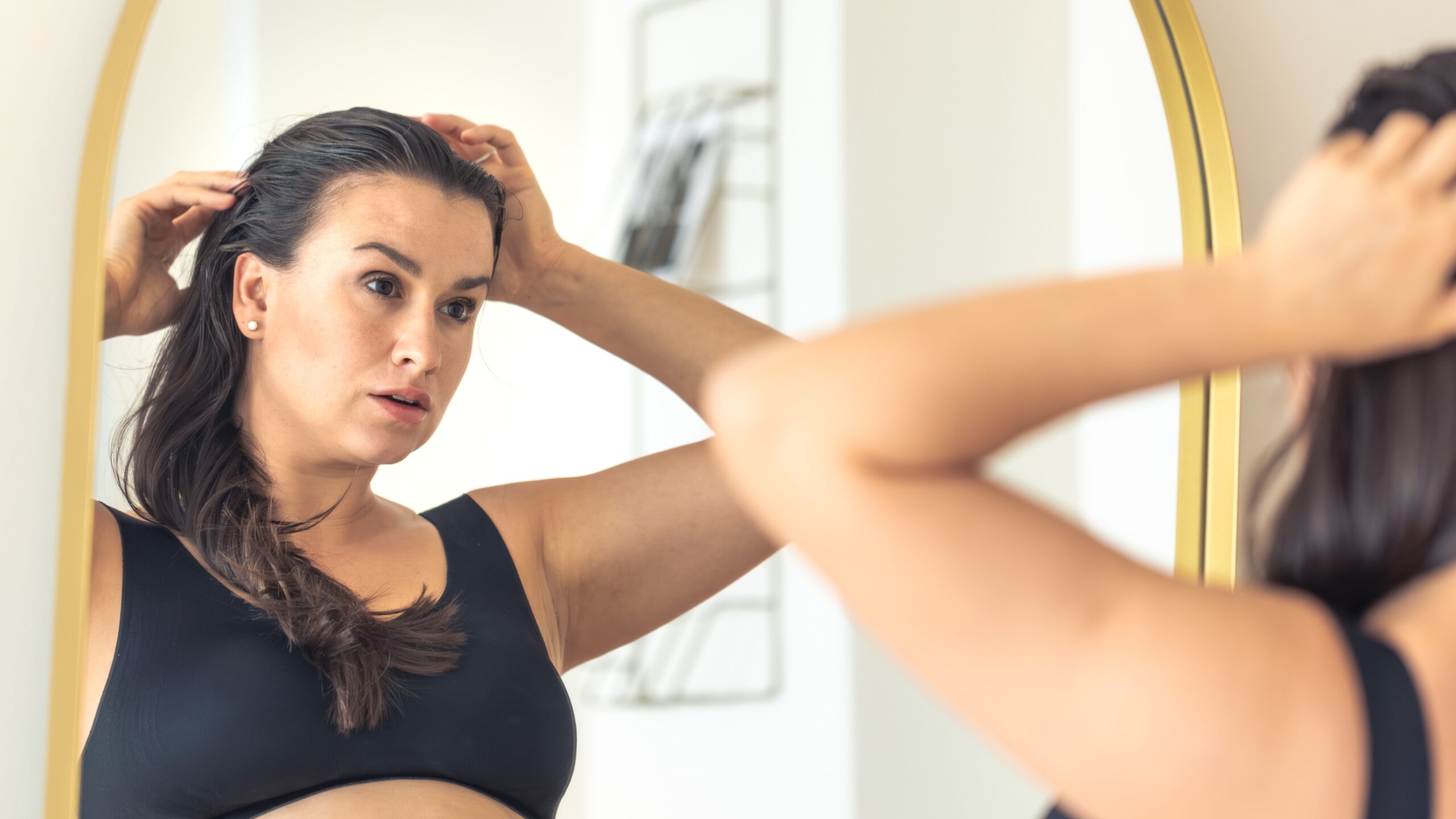
Postpartum hair shedding is one of the most common, and most alarming, things new mothers notice. Handfuls of hair in the shower or brush can feel scary, but in most cases, it’s a temporary, hormone-driven process that resolves on its own within a year. Still, a few warning signs mean it’s worth checking in with a dermatologist.
Why Hair Sheds So Much After Pregnancy
During pregnancy, high estrogen levels keep more hair in its active growth phase than usual. That’s why many women notice thicker, fuller hair while pregnant. It’s not that more hair is growing. Less of it is falling out.
After delivery, estrogen drops quickly. All the hair that stayed put during pregnancy suddenly shifts into its resting phase and sheds at once. Dermatologists call this telogen effluvium, and postpartum shedding is one of its most common causes. We covered this same mechanism in more depth in our guide to shedding, thinning, and breakage, since postpartum hair loss is really a real-world example of that shedding category.
The Postpartum Shedding Timeline
Most women follow a fairly predictable pattern. Here’s what to expect month by month:
| Timeframe | What’s Happening | Is It Normal? |
|---|---|---|
| 0-2 months | Hair still feels thick; hormones are adjusting | Yes |
| 2-4 months | Shedding becomes noticeable, often starting at the temples | Yes |
| 4-6 months | Shedding typically peaks | Yes |
| 6-9 months | Shedding slows down; short new hairs may appear | Yes |
| 9-12 months | Hair density improves and shedding returns to normal | Yes |
| 12+ months | Shedding continues at the same intensity | No, see a doctor |
On an average day, most people lose 50 to 100 hairs. During peak postpartum shedding, that number can jump to 300 or more per day. It sounds extreme, but your body is simply releasing months of retained hair within a short window.
What Makes Postpartum Shedding Worse
A few factors can intensify or extend the shedding phase beyond the typical window:
- Sleep deprivation. Chronic sleep loss raises cortisol levels, and elevated stress hormones are known to worsen and prolong telogen effluvium
- The physical demands of breastfeeding. Nursing pulls extra calories, iron, and nutrients from your body, and any existing nutrient gaps can show up as extended shedding
- Low iron levels. Blood loss during delivery is common, and low ferritin (the protein that stores iron) is one of the most frequent, and most fixable, causes of prolonged postpartum shedding
- Thyroid changes. Postpartum thyroiditis affects a meaningful percentage of new mothers, and both an underactive and overactive thyroid can trigger noticeable hair loss
- General stress. The broader adjustment to new parenthood, including anxiety and emotional strain, can extend the shedding timeline on its own
- Crash dieting to lose baby weight. Rapid, significant calorie restriction can act as its own shedding trigger, layering on top of the hormonal shift
None of these factors cause permanent hair loss on their own. They simply extend how long the shedding phase lasts, which is exactly why identifying and correcting them, especially iron and thyroid levels, often shortens recovery time significantly.
Gentle Hair Care During Postpartum Shedding
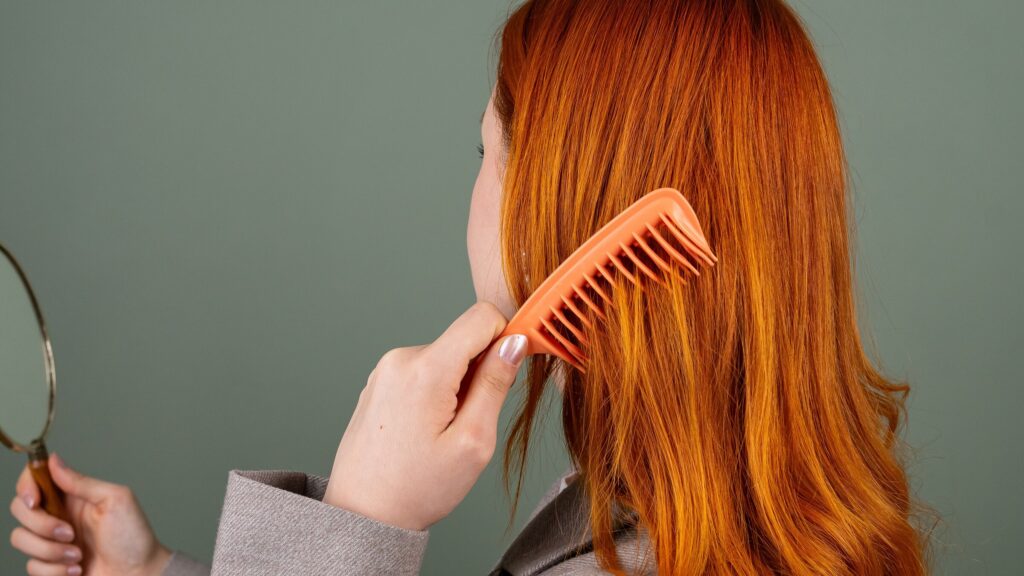
Your hair is more fragile during this phase, so small habit changes help:
- Skip tight ponytails, buns, or braids that pull on the hairline
- Reduce heat styling while shedding is at its peak
- Use a wide-tooth comb instead of a brush on wet hair
- Choose lightweight, volumizing products instead of heavy serums
- Focus on iron, zinc, biotin, and omega-3-rich foods to support regrowth
For a broader scalp-health routine that pairs well with this phase, our guide on treating your scalp like skin covers gentle, dermatologist-backed habits that apply here too.
When to See a Dermatologist
Most postpartum shedding resolves without any treatment. A few signs, though, suggest it’s time to get checked:
- Shedding that continues well past the 12-month mark
- Distinct bald patches, rather than overall diffuse thinning
- Scalp pain, itching, redness, or flaking alongside the shedding
- A noticeably widening part or visible scalp at the crown
- Fatigue, weight changes, or other whole-body symptoms alongside hair loss
The last point matters more than people expect. Thyroid imbalances and iron deficiency are two of the most common postpartum triggers, and both show up easily on a simple blood test.
Treatment Options If Shedding Persists
If shedding continues beyond the typical window, a dermatologist usually starts with bloodwork to rule out thyroid or iron issues . From there, treatment options can include:
- Topical minoxidil, an FDA-approved option shown to help extend the hair growth phase
- Correcting any iron, vitamin D, or thyroid imbalances found on bloodwork
- Nutritional support focused on protein, iron, and biotin intake
- In select cases, low-dose oral minoxidil, which has shown effectiveness for diffuse shedding in clinical review
A 2021 review found that low-dose oral minoxidil was both effective and generally well tolerated for diffuse hair thinning, though it’s typically considered after topical options and always under a dermatologist’s guidance.
Conclusion
Postpartum hair shedding feels dramatic, but for most women, it’s a temporary, hormone-driven phase that resolves within six to twelve months. Gentle hair care, good nutrition, and patience are usually enough to get through it. If shedding continues past a year, shows up in patches, or comes with other symptoms, a dermatologist can identify the cause and get you on the right treatment path sooner rather than later.
FAQ
Is postpartum hair loss the same as telogen effluvium?
Yes. Postpartum shedding is one of the most common causes of telogen effluvium, a temporary condition where hormonal shifts push more hair than usual into its resting phase.
Can I use minoxidil while breastfeeding?
Topical minoxidil is generally considered a reasonable option postpartum, but it’s best to confirm timing and safety with your dermatologist or OB before starting, especially while breastfeeding.
Will my hair go back to how it was before pregnancy?
For most women, yes, hair density typically returns to normal within a year. In some cases, pregnancy can reveal early genetic thinning that was already starting, which may need separate treatment.
Sources
- American Academy of Dermatology. “Hair Loss in New Moms.”
- American Academy of Dermatology. “Do You Have Hair Loss or Hair Shedding?”
- Ubie Health. “When Will My Hair Stop Falling Out? Postpartum Guide & Growth Plan.”
- Campbell, C. “Understanding Telogen Effluvium: Hair Shedding After Pregnancy, Stress, and COVID-19.”
- Randolph, M., Tosti, A. “Oral Minoxidil Treatment for Hair Loss: A Review of Efficacy and Safety.” Journal of the American Academy of Dermatology, 2021.
- Fleur. “If Shedding Persists Past 6 Months: What to Check Next.”
Leave a Reply