
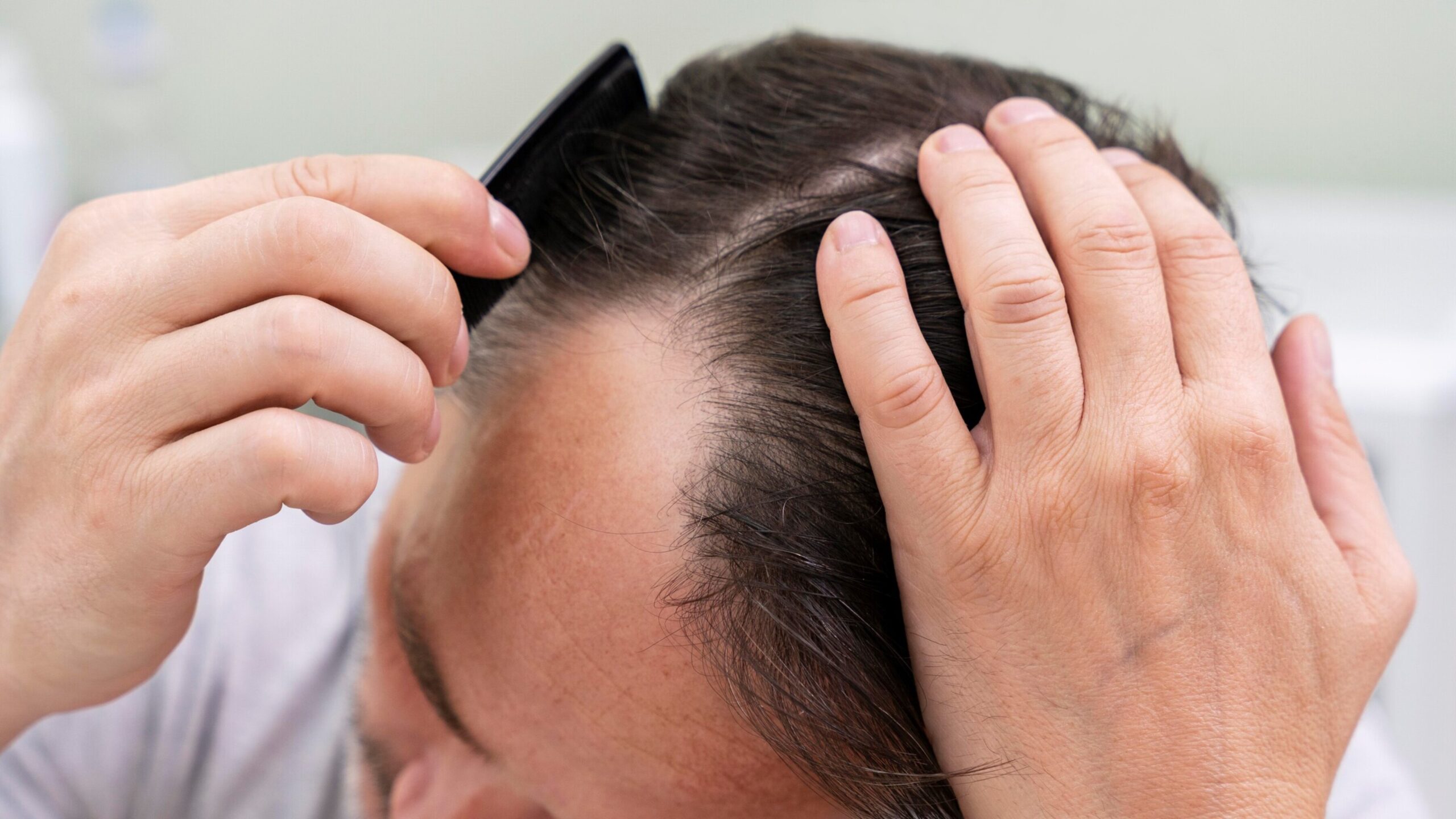
A receding hairline can feel alarming, but the honest answer is nuanced. Minoxidil can slow or sometimes partially reverse recession, but it works far better at protecting hair that’s still there than regrowing hair from follicles that have gone fully dormant. The earlier you catch it, the more your options actually matter.
Maturing Hairline vs. Receding Hairline
| Maturing Hairline | Receding Hairline | |
|---|---|---|
| Typical age | Late teens to late 20s | Any age, often starts at temples |
| Speed | Slow, then stops | Gradual, keeps progressing |
| Pattern | Even, mild “M” shape | Uneven, deeper at temples |
| Density | Stays the same | Visibly thins over time |
| Stabilizes on its own? | Yes, within a few years | No, worsens without treatment |
Is Your Hairline Maturing or Actually Receding?
What a Maturing Hairline Looks Like
A maturing hairline is a completely normal part of growing from adolescence into adulthood. It typically starts in the late teens to late 20s, shifts back evenly by about one to two centimeters, and forms a mild “M” shape in men or a gentle softening in women. Hair density stays the same throughout this process. Once it stabilizes, usually within a few years, most people don’t see further changes.
What a True Receding Hairline Looks Like
A receding hairline is a different process. It’s typically a sign of androgenetic alopecia, meaning it’s driven by genetics and hormone sensitivity rather than simple aging. It usually starts at the temples, progresses unevenly, and comes with visible thinning and density loss, not just a shift in position. Left alone, it keeps advancing rather than settling into a new stable shape.
This DHT-driven process, where sensitive follicles gradually shrink and produce finer, shorter hairs with each cycle, is the same underlying mechanism behind androgenetic alopecia, and a receding hairline is really just a location-specific expression of it.
What Causes a Receding Hairline
The primary driver is genetics combined with DHT (dihydrotestosterone) sensitivity. Hair follicles that are more sensitive to DHT gradually shrink through a process called miniaturization, producing thinner, shorter hairs over each growth cycle. A few factors can accelerate this process further:
- Tight hairstyles that pull on the hairline over time (traction)
- Excessive heat styling or harsh chemical treatments
- Smoking, which accelerates collagen and follicle breakdown
- Inflammatory scalp conditions like lupus or frontal fibrosing alopecia
Can Minoxidil Regrow a Receding Hairline?
What It Can Do
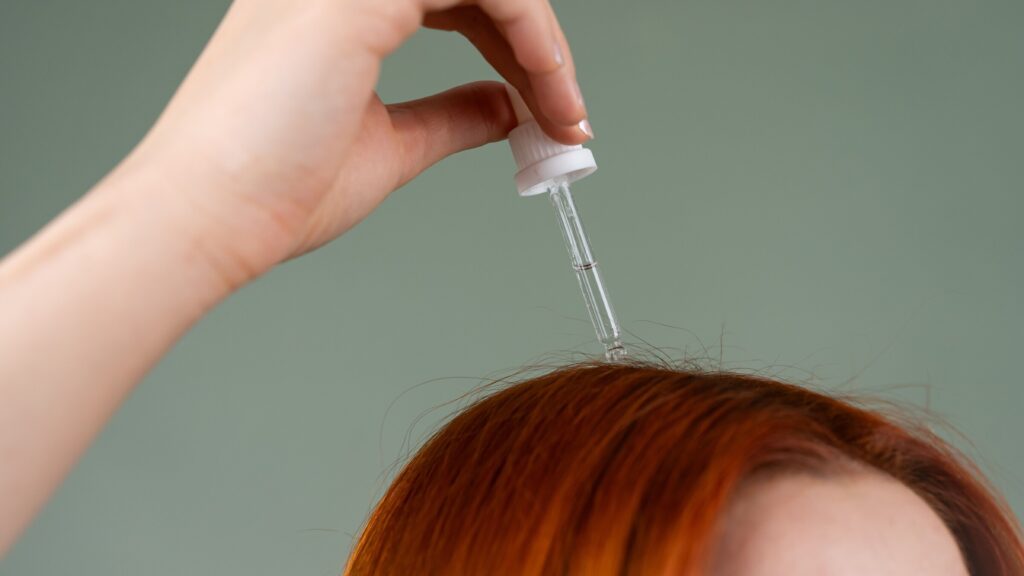
Minoxidil can help, but the honest expectation is stabilization first, with partial regrowth as a possible bonus rather than a guarantee. In areas of active or recent thinning, minoxidil helps keep follicles in their growth phase longer, which can slow or partially reverse recession. Research specifically looking at frontal hairline response found that early improvements in hair count were often followed by a return closer to baseline over time, meaning the primary win was holding the line rather than dramatic new growth.
What It Can’t Do
Minoxidil generally cannot regrow hair in areas that have been fully bald for years. Follicles don’t disappear entirely with androgenetic alopecia. They miniaturize and eventually stop producing visible hair, but even then, some may still be present in early-to-middle stages. Once a follicle has been inactive long enough, topical treatment usually can’t revive it. This is exactly why a hairline that’s visibly thinning but still growing fine, wispy hair responds far better than one that’s been bare for a long time.
Visible Results Timeline
Visible results at the hairline typically take longer than people expect, often starting around 2-4 months, with peak regrowth commonly seen closer to the one-year mark. Some people notice increased shedding in the first few weeks of starting minoxidil, which is actually a normal sign that older hairs are cycling out to make room for new growth, not a sign the product is failing. Any gains made typically reverse within 3-4 months of stopping treatment, so this is a long-term commitment rather than a short course.
Other Treatment Options Worth Knowing
Finasteride, a prescription medication, works differently than minoxidil by directly lowering DHT levels rather than stimulating follicles. Research combining minoxidil and finasteride together has shown meaningfully better results than either treatment alone, particularly for frontal hairline thinning. Because it’s prescription-only and carries potential side effects, it requires a conversation with a healthcare provider rather than an at-home decision.
Low-level light therapy (LLLT) works by using red or near-infrared wavelengths to stimulate cellular activity in hair follicles, and while evidence is still developing, some studies show modest improvements in hair density with consistent use over several months.
Supporting Habits That Help
None of these habits will reverse genetic hair loss on their own, but they can slow additional damage and support whatever treatment approach you choose:
- Reduce tight hairstyles and constant tension on the hairline
- Minimize heat styling and harsh chemical treatments
- Support overall scalp health with gentle, non-stripping products
- Manage stress where possible, since elevated stress hormones can compound hair thinning
Treating the scalp with the same care as facial skin, keeping it clean, moisturized, and free of buildup, supports healthier follicle function and can make any treatment you’re using more effective.
When to See a Professional
A few signs suggest it’s worth getting a professional evaluation rather than continuing to self-treat:
- Hairline changes happening rapidly over weeks rather than months or years
- Patchy or asymmetric thinning, rather than an even, gradual shift
- Shedding well beyond the normal 50-100 hairs per day
- No improvement after 6-12 months of consistent minoxidil use
- Any scalp redness, scaling, or pain accompanying the changes
FAQ
Is a receding hairline always genetic?
Genetics and DHT sensitivity are the primary drivers in most cases, but other factors like traction from tight hairstyles, nutritional deficiencies, thyroid issues, or inflammatory scalp conditions can also contribute or accelerate the process.
Can you regrow hair once it’s completely gone from an area?
Not with topical treatments alone. Once follicles have been inactive for years, minoxidil and similar treatments generally can’t revive them. Hair transplantation is the main option for restoring density in truly bald areas .
Does stress cause a receding hairline?
Stress is more strongly linked to diffuse shedding (telogen effluvium) than to true androgenetic recession, but chronic stress can still compound and accelerate existing genetic thinning.
Sources
- “Can I Stop a Receding Hairline? 12 Treatments to Try”, 2024, Healthline
- “Maturing vs Receding Hairline: How to Tell the Difference?”, 2026, Clinikally
- “Minoxidil for Receding Hairline: Does It Actually Work?”, 2026, Ro
- “Similar Response Patterns to Topical Minoxidil Foam 5% in Frontal and Vertex Scalp of Men with Androgenetic Alopecia”, 2015, British Journal of Dermatology
- “Comparing Minoxidil-Finasteride Mixed Solution with Minoxidil Solution Alone for Male Androgenetic Alopecia”, 2025, Frontiers in Medicine
Leave a Reply