
If you’re still dealing with breakouts well past your teenage years, you’re not doing something wrong on a fundamental level. Adult acne usually responds to the same handful of proven ingredients that treat teenage acne, but adult skin tends to be more reactive to over-treatment. The real skill is building a routine that treats breakouts consistently without stripping your skin raw in the process.
Identify Your Breakout Pattern
Before you pick a product, it helps to know what kind of acne you’re actually looking at. Different patterns respond to slightly different approaches, and treating the wrong pattern aggressively is one of the fastest ways to end up with irritated skin and no real improvement.
Hormonal-Pattern Acne
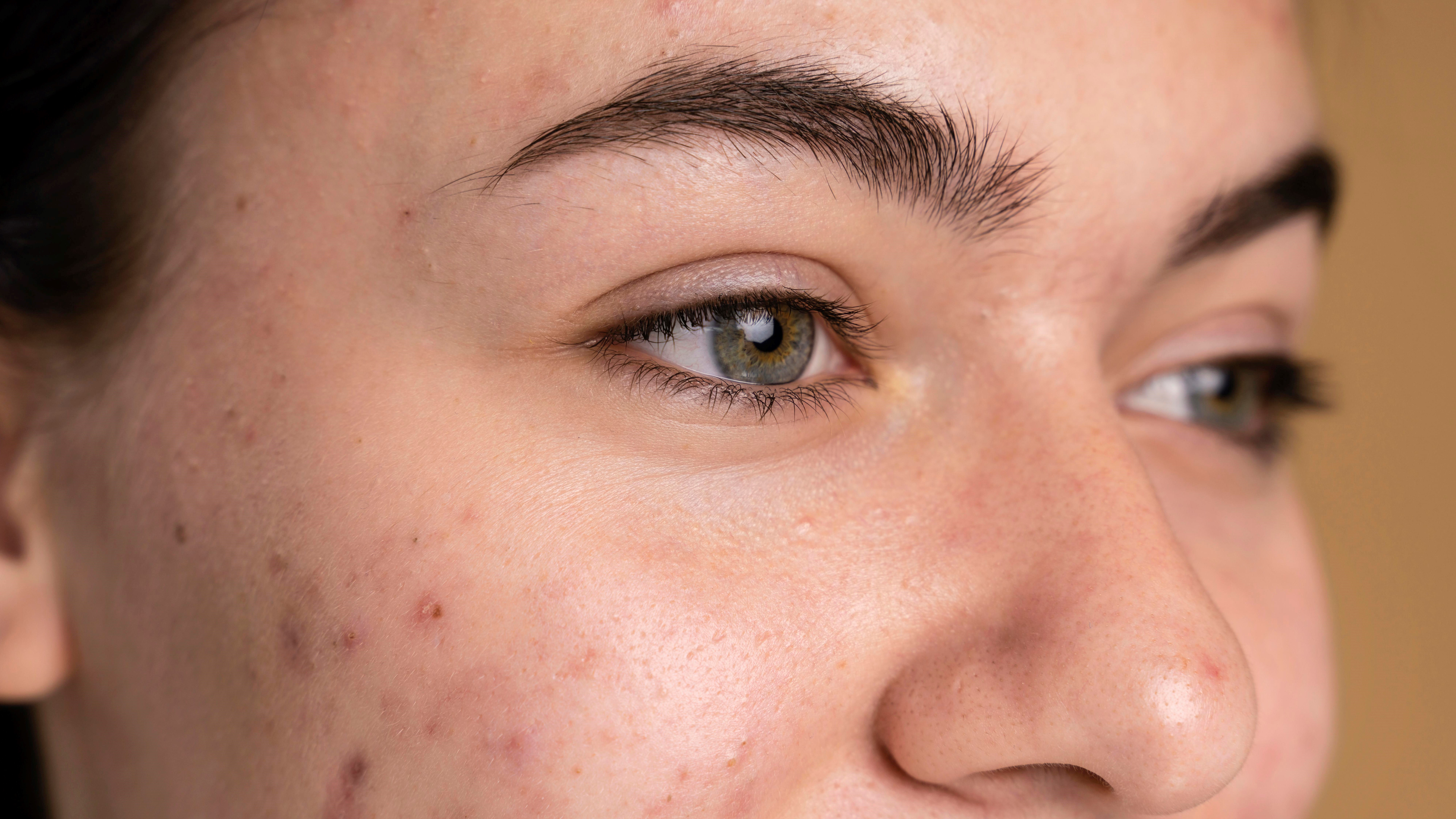
This type tends to cluster along the jawline, chin, and lower cheeks, and it often flares in a cyclical pattern tied to your menstrual cycle if you have one. It typically shows up as deeper, tender bumps rather than surface-level whiteheads, and it’s driven by hormonal fluctuations that increase oil production and inflammation around the follicle.
Clogged-Pore or Comedonal Acne
This shows up as blackheads, whiteheads, and small bumps, usually concentrated in the T-zone. It’s driven by a buildup of oil and dead skin cells inside the pore rather than deep inflammation, which is why it responds well to ingredients that speed up cell turnover. It’s worth telling this apart from milia and other clogged-pore bumps, since blackheads sit open at the surface, milia stay trapped under a thin layer of skin, and general congestion often looks more like texture than a distinct bump.
Irritation-Related Breakouts
Sometimes what looks like a new breakout is actually your skin reacting to too much exfoliation, a new active introduced too quickly, or a product that’s stripping your barrier. These tend to show up alongside redness, tightness, or a stinging sensation, and piling on more acne treatment usually makes them worse rather than better.
The Core At-Home Routine
Cleanse Without Over-Stripping
Once you have a general sense of your pattern, the actual routine can stay fairly simple. Complexity is usually where things go wrong.
Use a gentle, low-foaming cleanser twice a day. Skip anything that leaves your skin feeling tight or squeaky clean. That sensation is usually a sign your barrier is being stripped, not a sign your skin is properly clean.
Choose One Primary Active
The American Academy of Dermatology’s updated guidelines strongly recommend topical benzoyl peroxide and topical retinoids like adapalene as core treatments for acne. A few options worth knowing:
- Benzoyl peroxide reduces acne-causing bacteria and tends to work best for inflammatory breakouts.
- Adapalene and other retinoids normalize cell turnover inside the pore, making them well-suited to clogged-pore and comedonal acne.
- Salicylic acid is a gentler alternative that can work well for milder, congestion-driven breakouts.
Research on a fixed-dose combination of adapalene and benzoyl peroxide has also shown this pairing to be both safe and effective for long-term use, which is worth knowing if a single active isn’t cutting it. Still, pick one primary active to start. Adding several strong ingredients at once is the single biggest reason people end up with a damaged barrier instead of clear skin.
Build Tolerance Before Going Daily
Start your chosen active two to three times a week, and only increase to daily use once your skin has adjusted without noticeable irritation. This “start low, go slow” approach applies especially to retinoids, which are well known for causing dryness, flaking, and sensitivity if introduced too aggressively.
Moisturize and Wear Sunscreen Daily
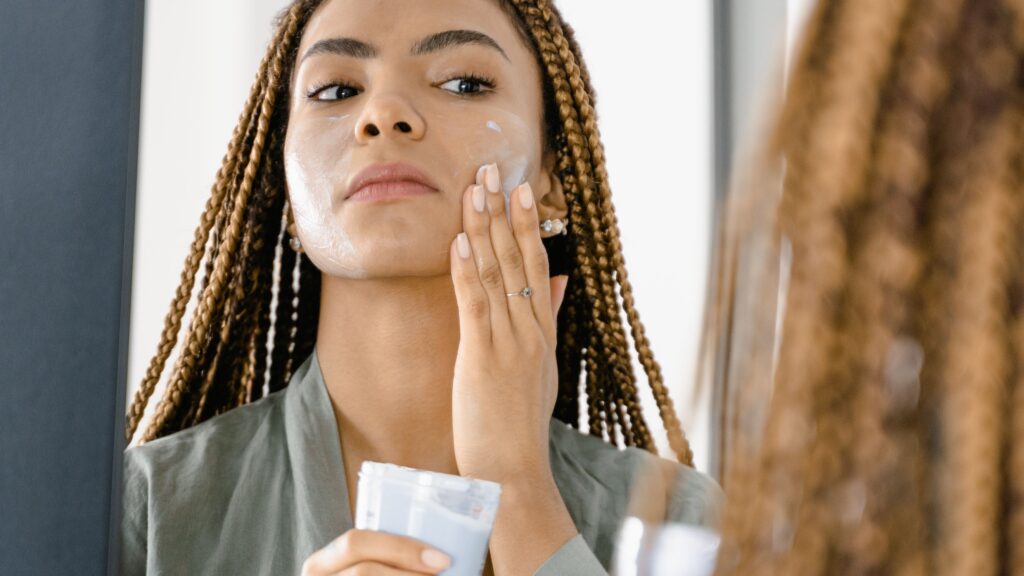
Both benzoyl peroxide and retinoids can increase sun sensitivity and dryness, so a daily moisturizer and broad-spectrum sunscreen are what makes the rest of the routine more sustainable.
Where LED Devices Fit In
If you’re considering an LED device to use at home, the evidence is more encouraging than it used to be. A 2025 review of six studies on at-home red and blue LED devices found that people using them saw reductions in breakouts compared to those who didn’t, with improvement generally becoming visible somewhere between four and twelve weeks of consistent use. Older research on light-based treatments was more mixed, with some studies showing weaker or less consistent results. An LED device can be a reasonable add-on to a topical routine, but it works best alongside proven actives, not instead of them.
Protect Your Barrier While Treating Acne
This is often the section people skip, and it’s usually the reason a routine that should work ends up failing.
Signs of Overtreatment
A few signals are worth watching for:
- Stinging or burning when you apply products that used to feel fine
- Visible flaking or rough patches
- Unusual tightness after cleansing
- Sudden reactivity to products you previously tolerated well
Ironically, an over-treated, irritated barrier can trigger more breakouts, not fewer, which sends a lot of people into a frustrating cycle of adding even more product.
More Actives Doesn’t Mean Faster Results
There’s a strong temptation to combine several acne-fighting ingredients at once, hoping for faster results. In practice, this usually backfires. Your skin can only tolerate so much active ingredient exposure before the barrier starts to break down, and once that happens, every other skin concern gets harder to manage, including acne itself
Buffer Strategies
If your active of choice is irritating, try the “moisturizer sandwich”:
- Apply a thin layer of moisturizer.
- Follow with your active ingredient.
- Finish with another layer of moisturizer on top.
This slows absorption slightly and reduces irritation without reducing effectiveness. You can also alternate nights between your active and a plain moisturizing night to give your skin recovery time.
Setting a Timeline
Most topical actives take around 8 to 12 weeks of consistent use before you see the full effect. That’s the main reason routines fail, not because the ingredients don’t work, but because people switch products every two or three weeks out of impatience. LED-based improvement tends to show up somewhat earlier in trial settings, often within the first month, but the topical routine underneath it is still doing the heavier lifting over time.
A short adjustment period in the first few weeks, sometimes called “purging,” is common with retinoids specifically, since they speed up the turnover of existing clogged pores before things visibly improve. This isn’t universal, and it shouldn’t be used as an excuse to push through severe irritation, but mild, temporary texture changes in the first few weeks aren’t automatically a sign to stop.
Treating Marks After the Breakout Clears
Once active breakouts are under control, it’s tempting to immediately shift focus to fading whatever marks are left behind. It’s worth treating the active acne first and letting things settle before adding scar-focused treatments, since new inflammation can undo progress on old marks.
Signs Your Routine Needs a Dermatologist
At-home routines can handle mild to moderate acne, but a few signs mean it’s time to bring in a professional rather than adjusting the routine further:
- Painful nodules or cysts, which sit deeper in the skin and rarely respond well to topical treatment alone
- Scarring that’s actively forming, since waiting can make outcomes harder to reverse
- No meaningful improvement after three full months of consistent use
- Signs of hormonal imbalance, such as irregular cycles, sudden excess facial or body hair growth, or acne that appeared abruptly and severely
A dermatologist has access to oral medications, prescription-strength topicals, and hormonal treatments that go beyond what’s available over the counter, and in cases involving nodules, cysts, or hormonal signs, that additional toolkit often makes a real difference.
FAQ
Can adult acne go away on its own?
Sometimes, especially if it’s tied to a temporary hormonal shift or a specific product you’ve since stopped using. But persistent adult acne, especially hormonal-pattern acne, often needs an active routine rather than time alone.
Is it normal for acne to get worse before it gets better?
A mild, temporary increase in texture or small breakouts can happen in the first few weeks of starting a retinoid, as it speeds up the turnover of pores that were already clogged beneath the surface. Severe irritation or a major flare, though, is a sign to scale back rather than push through.
Can diet or stress cause adult acne?
Stress can worsen acne by increasing inflammation and oil production, and some research links high-glycemic diets and dairy to acne flares in certain people, though the connection varies quite a bit from person to person. Neither replaces a topical routine, but both are reasonable factors to pay attention to if breakouts seem tied to specific patterns in your life.
Sources
- “American Academy of Dermatology issues updated guidelines for acne management”, 2026, American Academy of Dermatology
- “Safety and Efficacy of Fixed-Dose Combination of Adapalene and Benzoyl Peroxide”, 2024, Cureus
- “At-Home LED Devices for the Treatment of Acne Vulgaris”, 2025, JAMA dermatology
- “Light therapies for acne: abridged Cochrane systematic review”, 2018, British Journal of Dermatology
- “Visible Light in the Treatment of Acne Vulgaris”, 2024, Journal of cutaneous medicine and surgery
Leave a Reply